Mammals of Tal Chhapar
Birds and Animal Pdf
Explore the wonderful world of birds and animals
Download the PDF to learn more about their types, habits and more amazing facts.
 Download PDF
Free & Easy to Download
Birds and Animal Pdf
Free & Easy to Download
1. Black buck
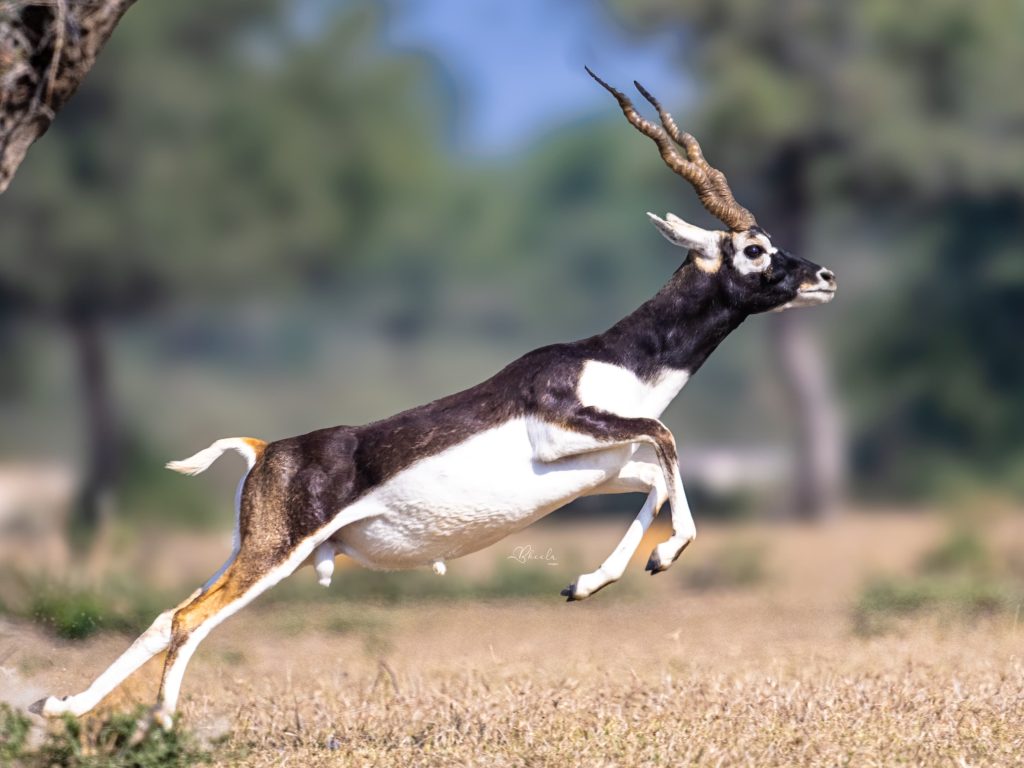
Blackbuck is the most famous animal of Tal Chhapar Sanctuary and is known for its speed, spiral horns, and large herds in open grasslands.
Some quick facts:
Scientific name: Antilope cervicapra
Speed: Can run up to around 70–80 km/h
Diet: Grass, leaves, and small plants
Identification: Males usually have dark brown to black coloration with long spiral horns, while females are lighter brown
Behavior: Often seen grazing in groups and performing high jumps called stotting when alarmed
Best time to see: Early morning and late afternoon
Tal Chhapar is one of the best places in India to observe blackbuck in open habitat because the grasslands provide clear visibility and support large populations.
2. Indian gazelle
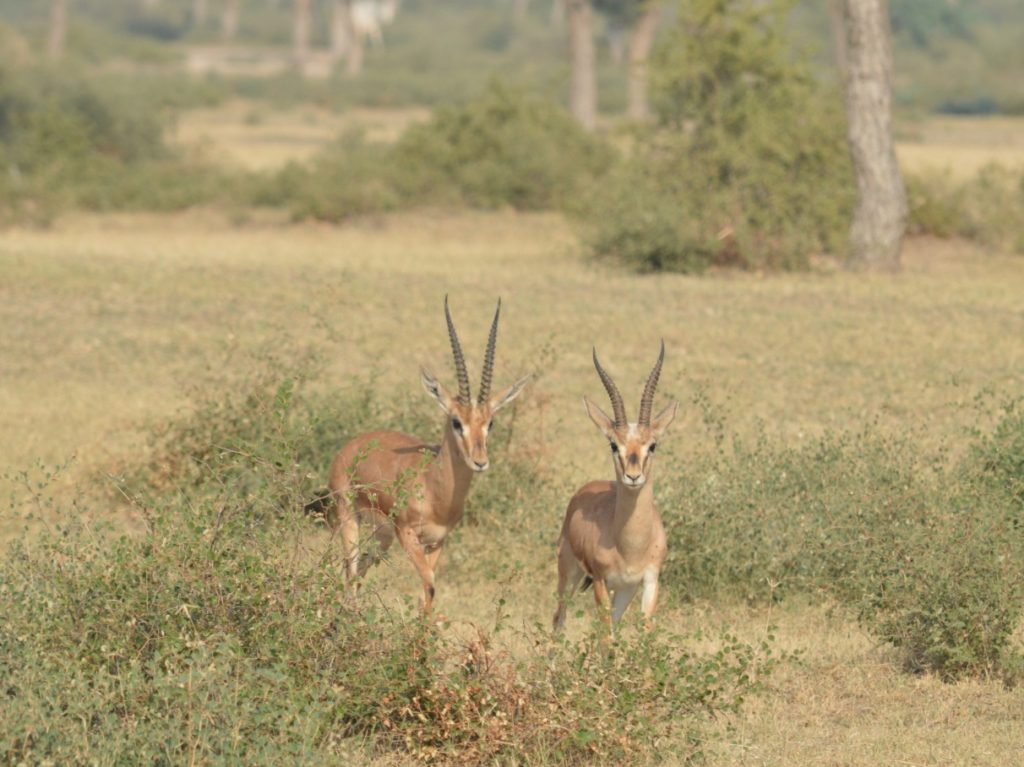
Indian Gazelle, commonly called Chinkara, is another graceful antelope found in the grasslands and semi-desert areas around Tal Chhapar Sanctuary, though it is less commonly seen inside the sanctuary compared to blackbuck.
Quick facts about Chinkara (Indian Gazelle):
Scientific name: Gazella bennettii
Common name: Chinkara / Indian Gazelle
Diet: Grasses, leaves, fruits, and shrubs
Appearance: Light brown coat with white underside and dark facial stripes
Behavior: Usually shy, alert, and often seen alone or in small groups
Special adaptation: Can survive for long periods with very little water, getting moisture from plants
Habitat: Grasslands, scrublands, and desert landscapes
Chinkara are known for their speed and ability to make quick jumps while escaping predators.
3. Desert Fox
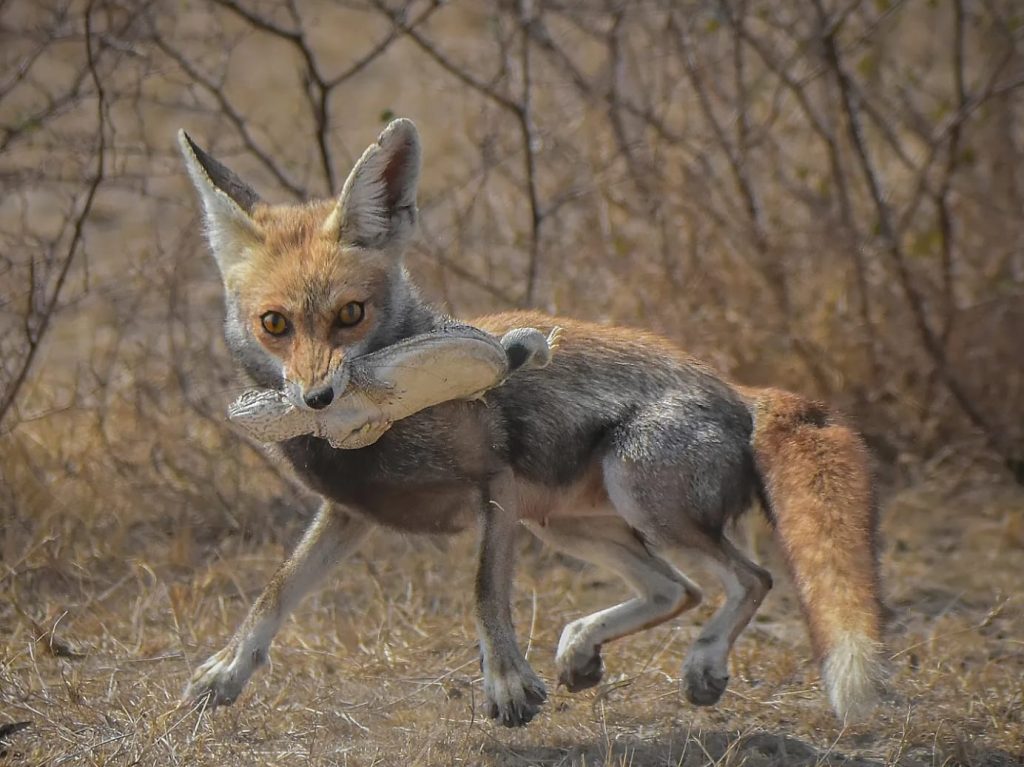
Desert Fox is one of the interesting mammals found around Tal Chhapar Sanctuary. It is well adapted to dry grasslands and desert habitats.
Quick facts about Desert Fox:
Scientific name: Vulpes vulpes pusilla (Indian Desert Fox form)
Appearance: Small fox with sandy-colored fur, large ears, bushy tail, and pointed face
Diet: Omnivorous – eats insects, rodents, reptiles, fruits, and small birds
Behavior: Mostly nocturnal and shy; usually active during dawn, dusk, or night
Habitat: Dry grasslands, scrublands, and desert areas
Adaptations: Large ears help release heat and detect prey underground
In Tal Chhapar, desert fox sightings are less common than blackbuck sightings because foxes are more secretive and often avoid activity during the hottest part of the day. Early morning, late evening, or night drives around surrounding grasslands can increase chances of seeing them.
4. Desert Cat
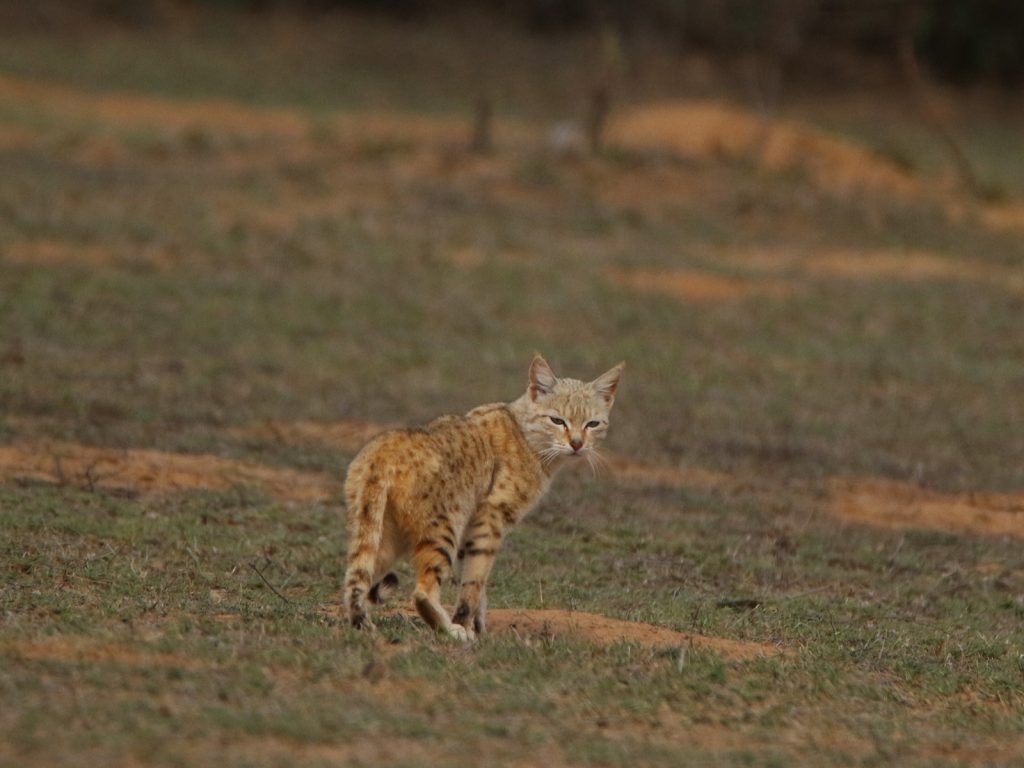
Desert Cat is one of the rare and secretive small wild cats associated with the grasslands and desert ecosystem around Tal Chhapar Sanctuary. It is much harder to spot than blackbuck or foxes because it is mostly nocturnal and extremely well camouflaged.
Quick facts about Desert Cat:
Scientific name: Felis lybica ornata
Appearance: Sandy-grey coat with dark spots and stripes, large ears, long legs, and a ringed tail
Diet: Rodents, birds, reptiles, insects, and small mammals
Behavior: Mostly active at night and during cooler hours; usually solitary
Habitat: Grasslands, scrublands, semi-desert areas, and sandy landscapes
Why difficult to see: Excellent camouflage and secretive behavior make sightings uncommon
5. Jungle Cat
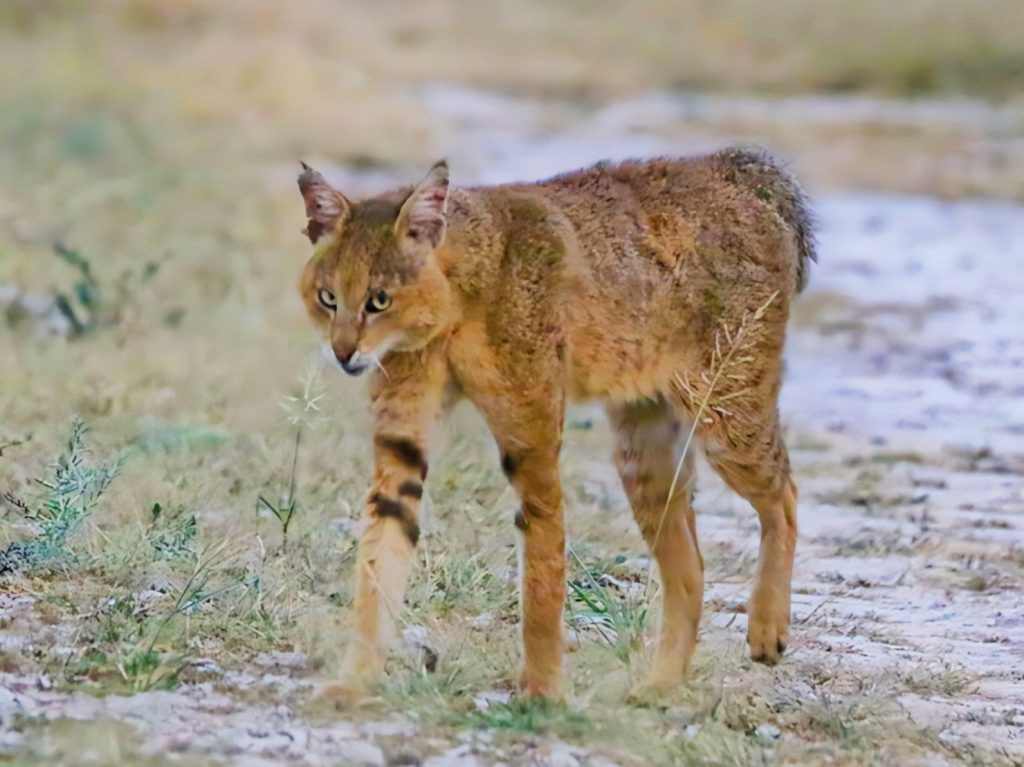
Jungle Cat is another small wild cat that can be found in and around Tal Chhapar Sanctuary. Compared to desert cat, jungle cats are generally larger and are sometimes seen more frequently in grasslands and scrub areas.
Quick facts about Jungle Cat:
Scientific name: Felis chaus
Appearance: Sandy-grey to brown coat, long legs, short tail with black tip, and pointed ears
Size: Larger than most small wild cats found in the region
Diet: Rodents, birds, reptiles, insects, and small mammals
Behavior: Usually solitary and active during early morning, evening, and night
Habitat: Grasslands, wetlands, scrublands, agricultural edges, and open countryside
Identification tip: Long legs, upright posture, and short black-tipped tail help distinguish it from domestic cats
6. Golden Jackal
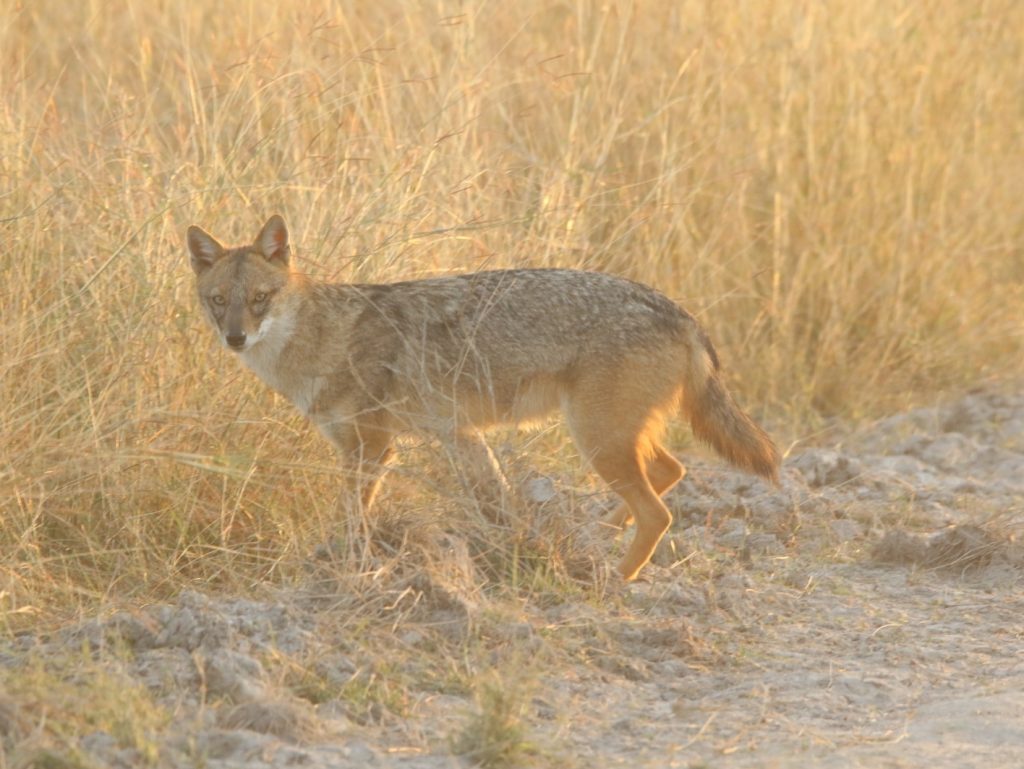
Golden Jackal is one of the common predators seen in and around Tal Chhapar Sanctuary. They are adaptable animals and play an important role as scavengers and hunters in the grassland ecosystem.
Quick facts about Golden Jackal:
Scientific name: Canis aureus
Appearance: Golden-brown to grey coat, pointed ears, bushy tail, and dog-like appearance
Diet: Omnivorous — feeds on rodents, birds, reptiles, insects, fruits, carrion, and small mammals
Behavior: Usually seen alone, in pairs, or small family groups
Activity: Most active during early morning, evening, and night
Habitat: Grasslands, scrublands, agricultural areas, and semi-desert landscapes
7. Indian Hare
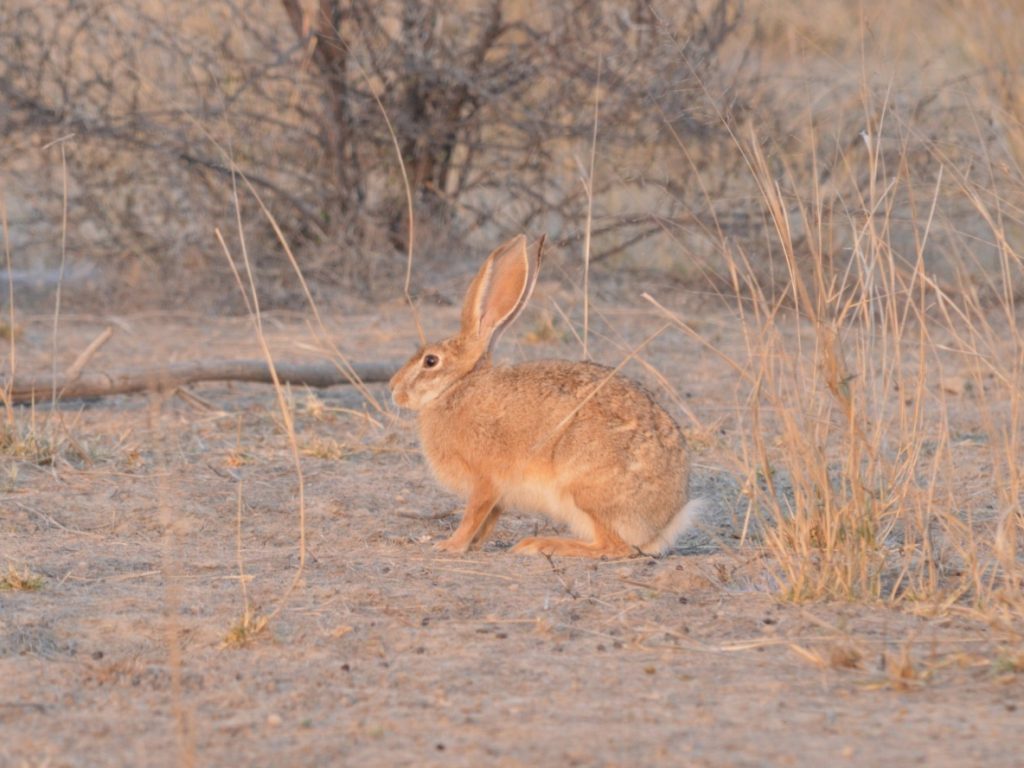
Indian Hare is a common small mammal found in and around Tal Chhapar Sanctuary. It is often seen sitting quietly in grasslands and suddenly running when disturbed.
Quick facts about Indian Hare:
Scientific name: Lepus nigricollis
Appearance: Brown-grey fur, long ears, powerful hind legs, and a small tail
Diet: Grasses, herbs, leaves, and other vegetation
Behavior: Mostly active during dawn, dusk, and night
Habitat: Grasslands, scrublands, agricultural edges, and open countryside
Defense strategy: Relies on camouflage and fast running to escape predators
Interesting fact:
Indian hares are important prey animals for foxes, jackals, raptors, and wild cats, making them an important part of the Tal Chhapar grassland ecosystem.
8. Nilgai
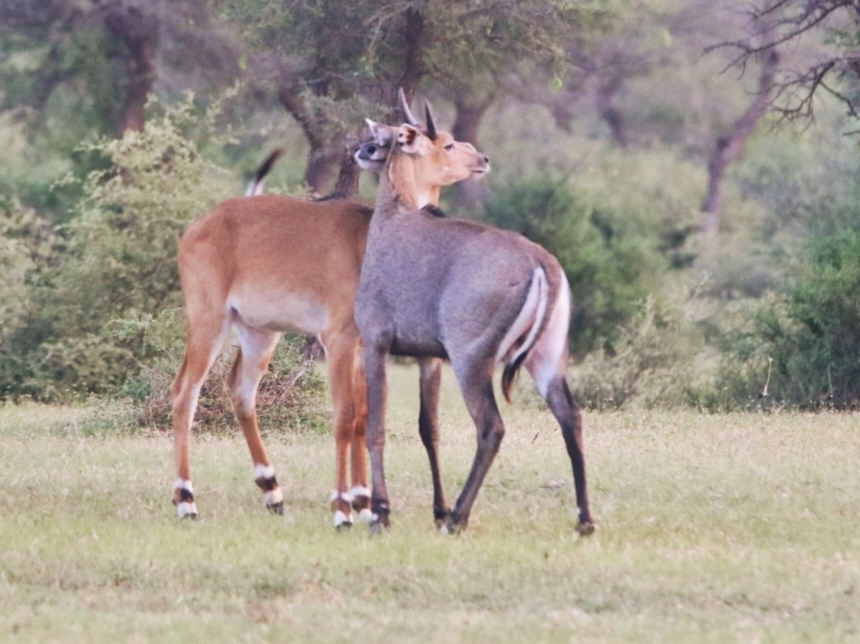
Nilgai, commonly called Blue Bull, is the largest antelope in India and is found in grasslands, scrublands, and agricultural landscapes around Tal Chhapar Sanctuary.
Quick facts about Nilgai (Blue Bull):
Scientific name: Boselaphus tragocamelus
Size: Largest Asian antelope species
Appearance: Adult males are bluish-grey (which gives the name “Blue Bull”), while females are usually brownish
Horns: Only males usually have short, straight horns
Diet: Grasses, leaves, crops, shrubs, and fruits
Behavior: Usually seen in small groups, though solitary males are common
Habitat: Open grasslands, scrub forests, farmland edges, and semi-arid landscapes
9. Indian Desert Jird
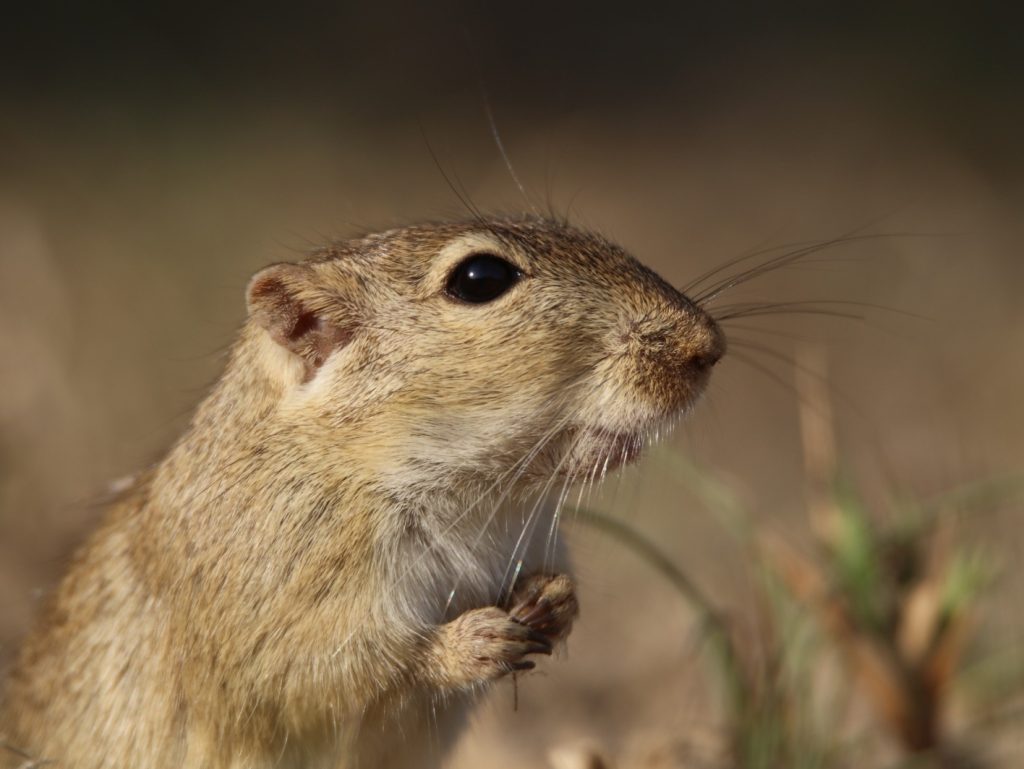
Indian Desert Jird is a small desert rodent found in arid grasslands and sandy habitats around Tal Chhapar Sanctuary. Although small and often overlooked, it is an important part of the desert ecosystem.
Quick facts about Indian Desert Jird:
Scientific name: Meriones hurrianae
Appearance: Sandy-brown fur, large eyes, small rounded ears, and a long tail with a tuft near the end
Diet: Seeds, grasses, roots, and other plant material
Behavior: Mostly active during cooler hours and often lives in underground burrow systems
Habitat: Sandy plains, desert grasslands, scrublands, and semi-arid regions
Ecological role: Important prey for foxes, jackals, snakes, owls, and birds of prey
10. Indian Grey Mongoose
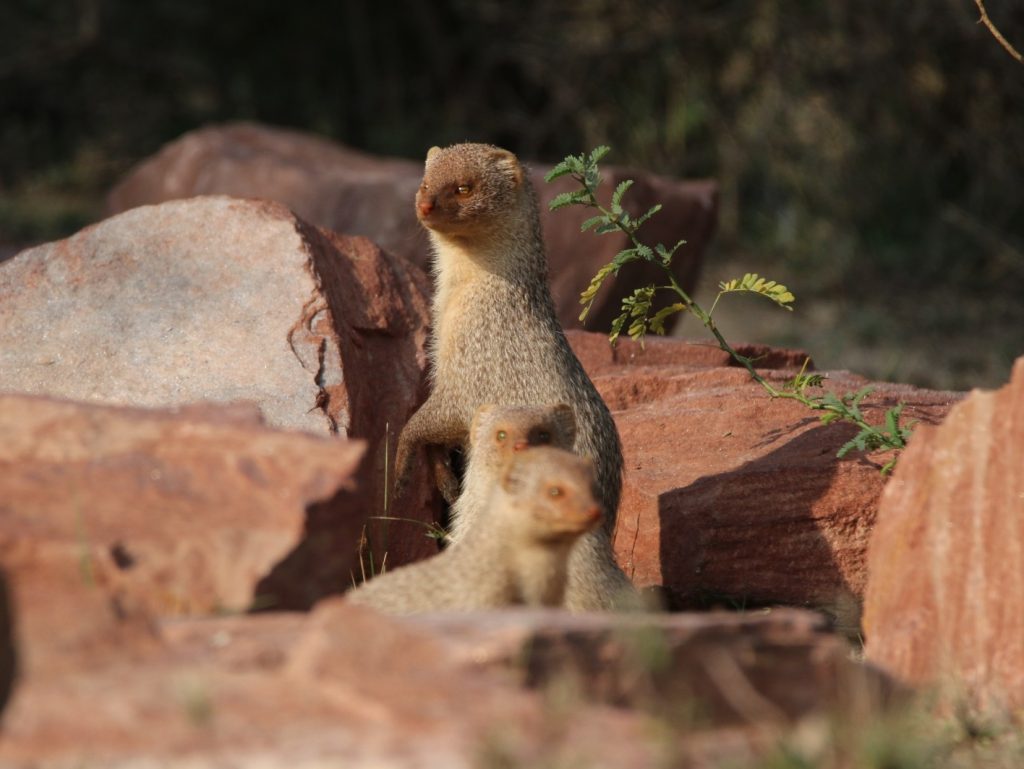
Indian Grey Mongoose is a common small carnivore found in grasslands, scrublands, and villages around Tal Chhapar Sanctuary. It is known for being fast, alert, and adaptable.
Quick facts about Indian Grey Mongoose:
Scientific name: Herpestes edwardsii
Appearance: Grey grizzled fur, pointed face, short legs, and a long bushy tail with a darker tip
Diet: Rodents, insects, reptiles, birds, eggs, and small mammals
Behavior: Usually solitary or seen in pairs; active mainly during daytime
Habitat: Grasslands, scrublands, agricultural areas, and human-dominated landscapes
Famous for: Its speed and agility when hunting snakes
11. Indian Crested Porcupine
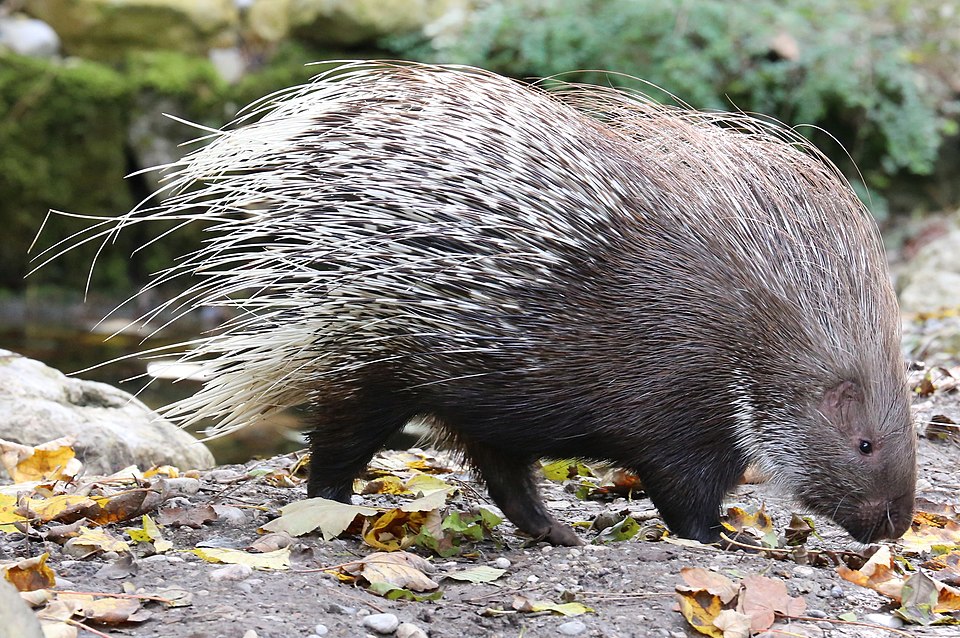
Indian Crested Porcupine is a large nocturnal rodent found in dry grasslands, scrublands, and semi-desert habitats around Tal Chhapar Sanctuary. Because it is mostly active at night, sightings are less common during daytime safaris.
Quick facts about Porcupine:
Scientific name: Hystrix indica
Appearance: Large rodent covered with long black-and-white quills used for defense
Diet: Roots, bulbs, fruits, bark, seeds, and vegetation
Behavior: Mostly nocturnal and usually lives in burrows or rocky shelters
Defense: Raises and rattles its quills when threatened; predators can be injured by the sharp quills
Habitat: Grasslands, scrub forests, rocky areas, farmland edges, and desert landscapes
12. Indian Wolf
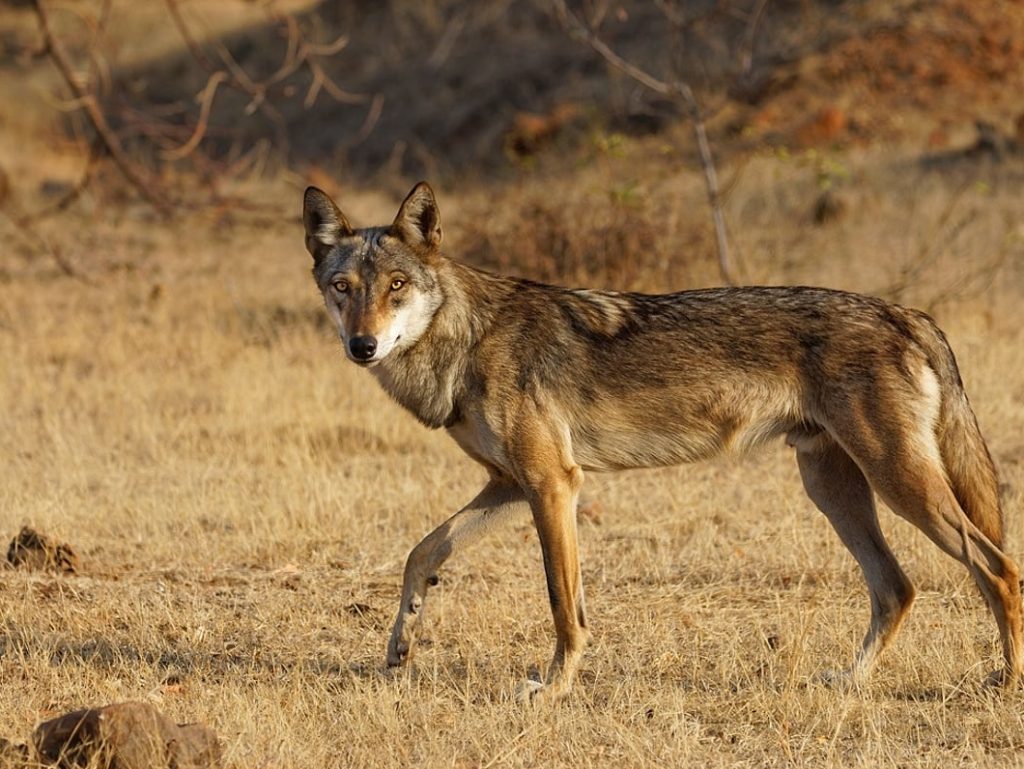
Indian Wolf is one of the most elusive predators associated with grassland and semi-arid landscapes around Tal Chhapar Sanctuary. Sightings are rare, but the surrounding grassland landscape can support roaming wolves.
Quick facts about Indian Wolf:
Scientific name: Canis lupus pallipes
Appearance: Smaller and leaner than many other wolf populations, with sandy-grey to brown fur and long legs
Diet: Blackbuck fawns, hares, rodents, livestock, and other small to medium-sized prey
Behavior: Usually lives in pairs or small packs and covers large distances while hunting
Habitat: Open grasslands, scrublands, semi-desert regions, and agricultural landscapes
Activity: Most active during cooler hours, especially dawn, dusk, and night.
13. Indian Fox
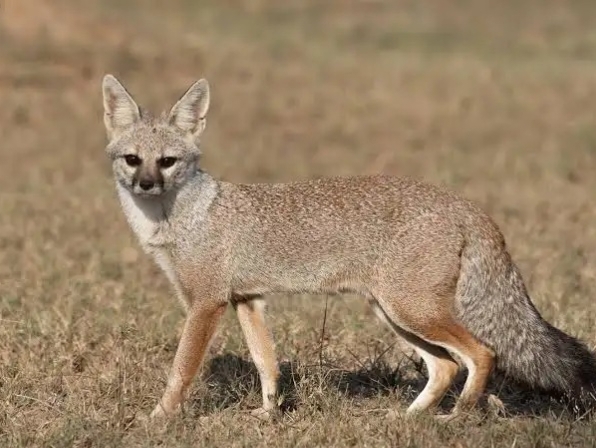
Indian Fox, also called the Bengal Fox, is one of the smaller carnivores found in and around Tal Chhapar Sanctuary. Studies have documented a small breeding population around the sanctuary, making the area an important habitat for the species.
Quick facts about Indian Fox:
Scientific name: Vulpes bengalensis
Appearance: Small fox with grey-brown fur, long pointed ears, black-tipped bushy tail, and slender body
Diet: Insects, rodents, reptiles, birds, fruits, and small mammals
Behavior: Mostly active during dawn, dusk, and night; usually seen alone or in pairs
Habitat: Open grasslands, scrublands, and semi-desert landscapes — habitats that match Tal Chhapar well.
Interesting fact: Indian foxes often live in burrows and may use multiple den sites, especially during breeding season.
 Raptors Inn Guest House
  raptorsinn@gmail.com