Birds of Tal Chhapar

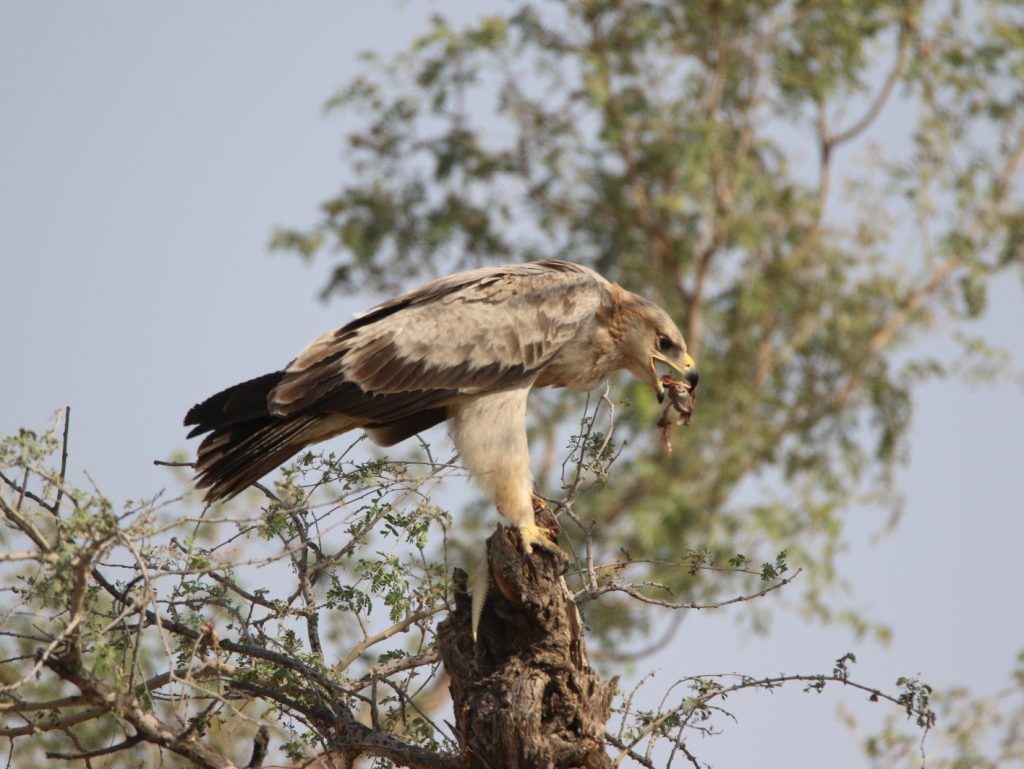
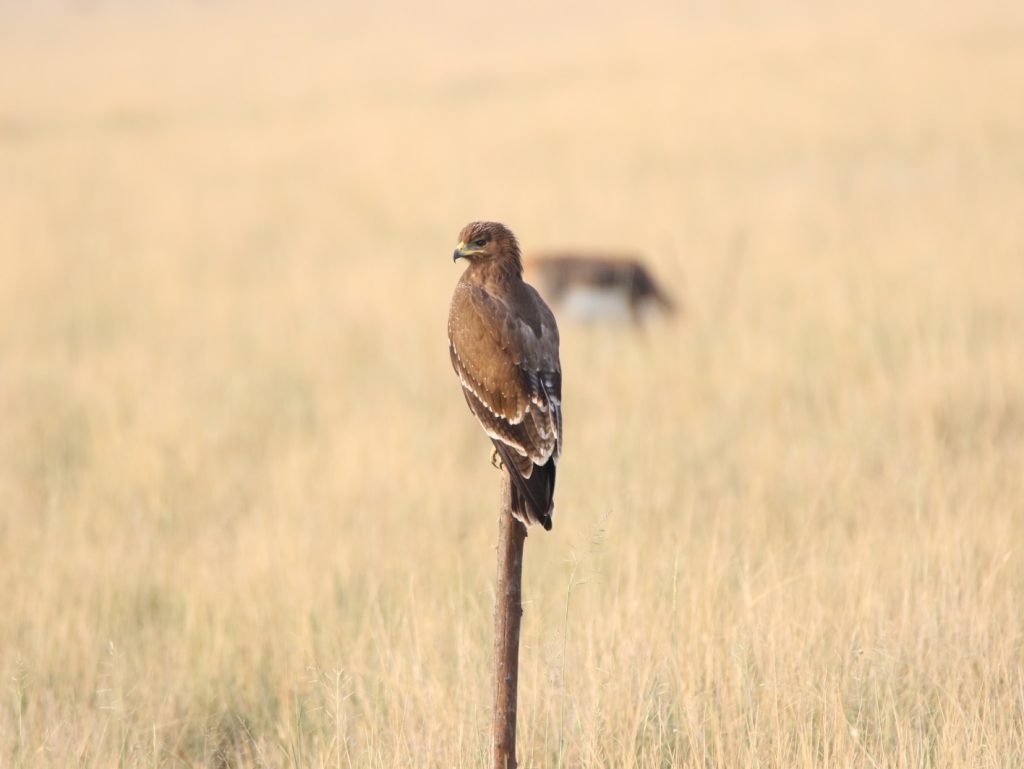
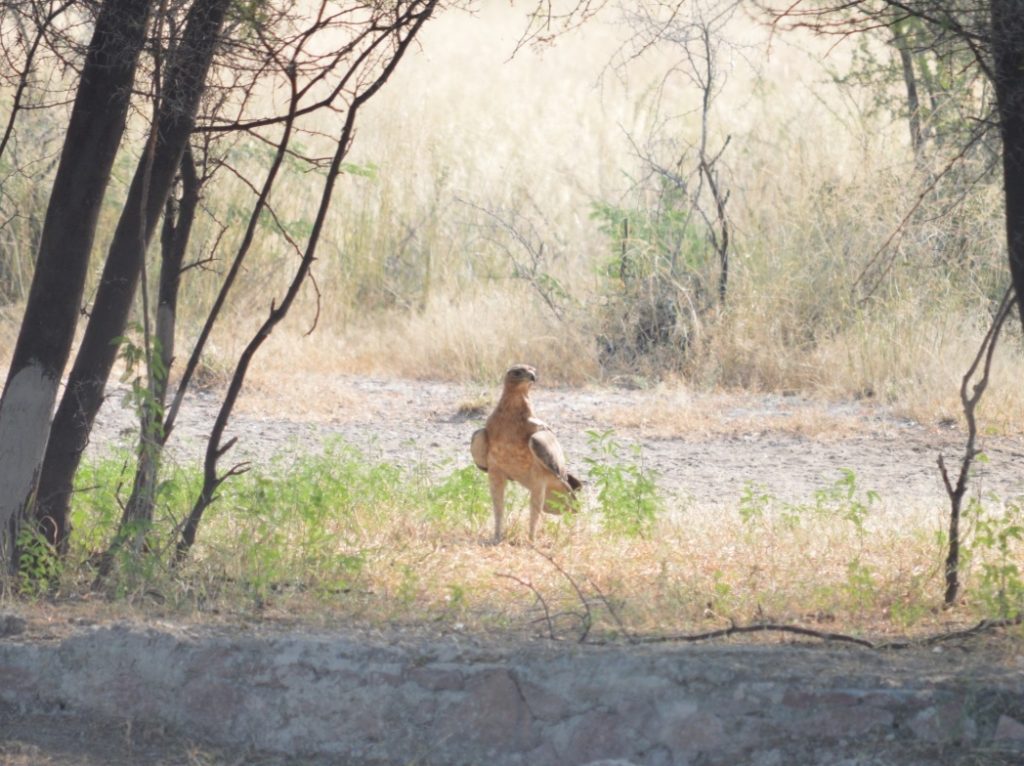
1. Tawny Eagle

Tawny Eagle is one of the impressive birds of prey seen in and around Tal Chhapar Sanctuary. The open grasslands and scattered trees provide good hunting and perching habitat for this large eagle.
Quick facts about Tawny Eagle:
Scientific name: Aquila rapax
Appearance: Large brown eagle with broad wings, powerful bill, and variable tawny to dark brown plumage
Diet: Small mammals, reptiles, birds, carrion, and occasionally insects
Wingspan: Around 1.7–2 meters

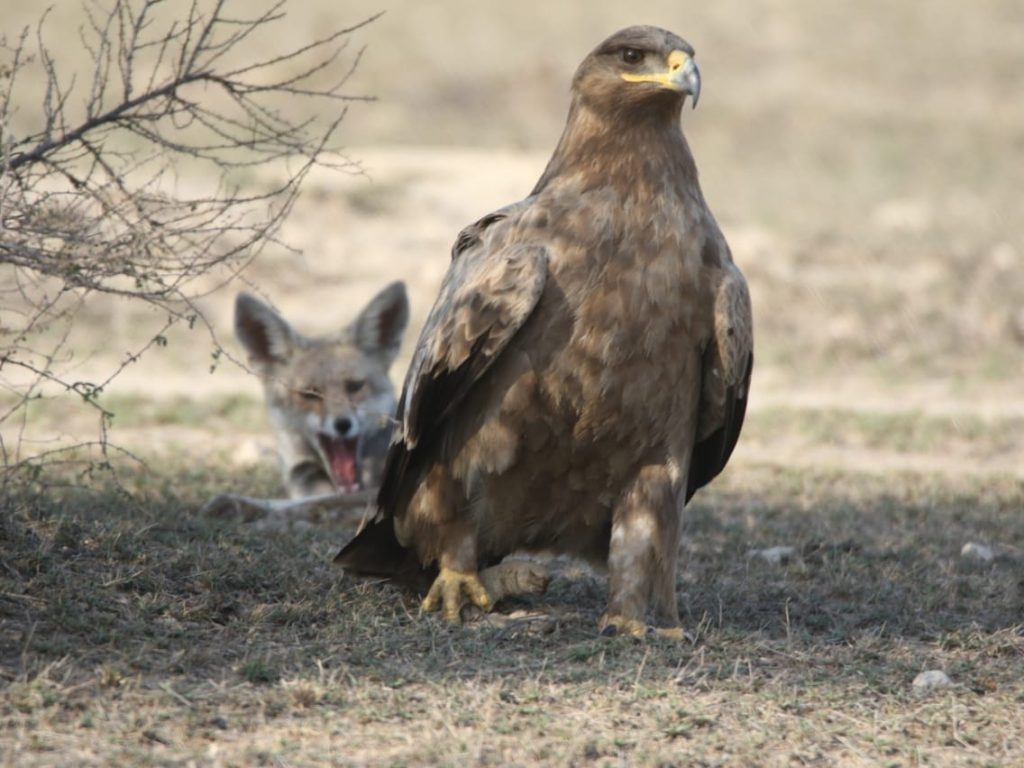
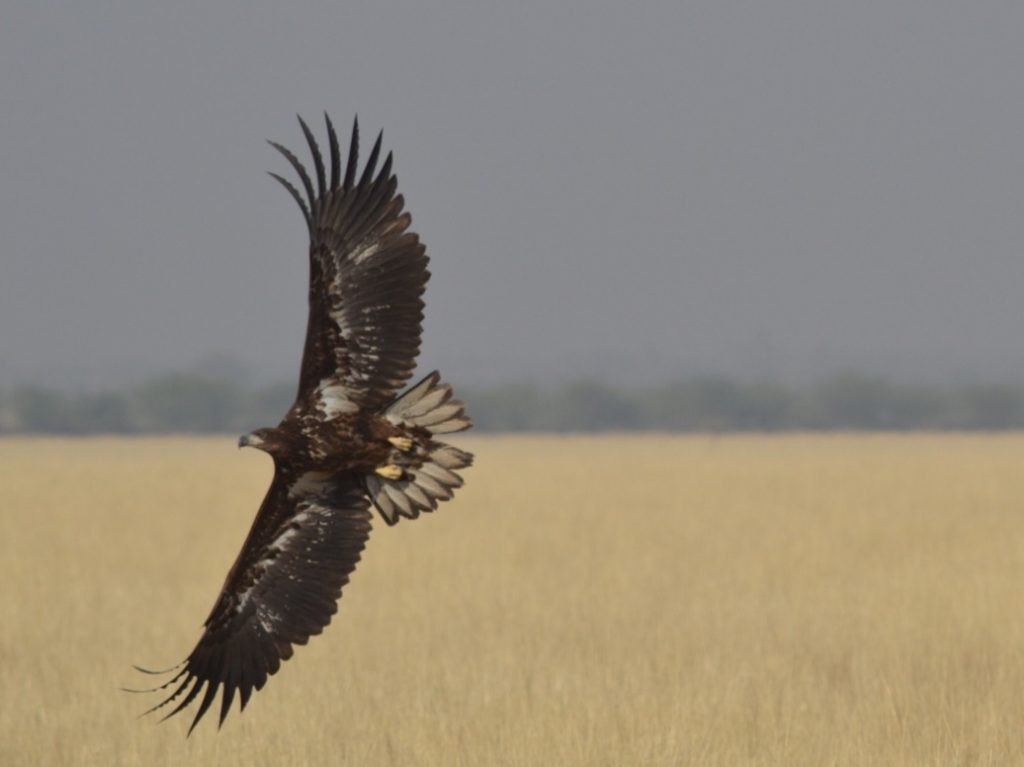
2. Steppe Eagle

Steppe Eagle is one of the most important winter raptors seen in and around Tal Chhapar Sanctuary. Tal Chhapar is well known among birders because large numbers of migratory raptors use these grasslands during winter.
Quick facts about Steppe Eagle:
Scientific name: Aquila nipalensis
Appearance: Large dark brown eagle with broad wings, powerful bill, and relatively long wingspan
Wingspan: Around 1.7–2.2 meters
Diet: Rodents, small mammals, birds, reptiles, carrion, and sometimes insects
Behavior: Frequently seen soaring, perched on trees or poles, and feeding on carcasses
Migration: Breeds in Central Asian steppes and migrates south to the Indian subcontinent during winter (Oct to March).

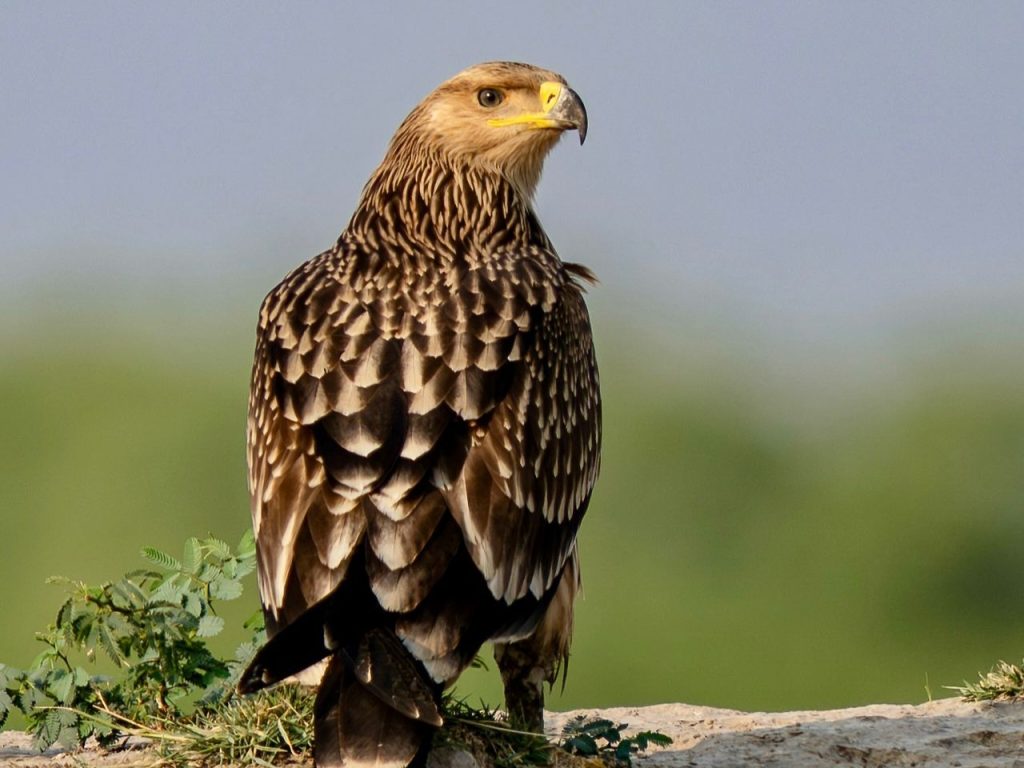
3. Eastern Imperial Eagle

Eastern Imperial Eagle is one of the prized winter raptors recorded in and around Tal Chhapar Sanctuary.

Quick facts about Imperial Eagle:
Scientific name: Aquila heliaca
Appearance: Large dark eagle with broad wings, strong bill, and often pale patches on the shoulders in adults
Wingspan: Around 1.8–2.1 meters
Diet: Small mammals, birds, reptiles, carrion, and occasionally larger prey.
Migration: Breeds across parts of Eurasia and migrates south during winter (Oct to March)

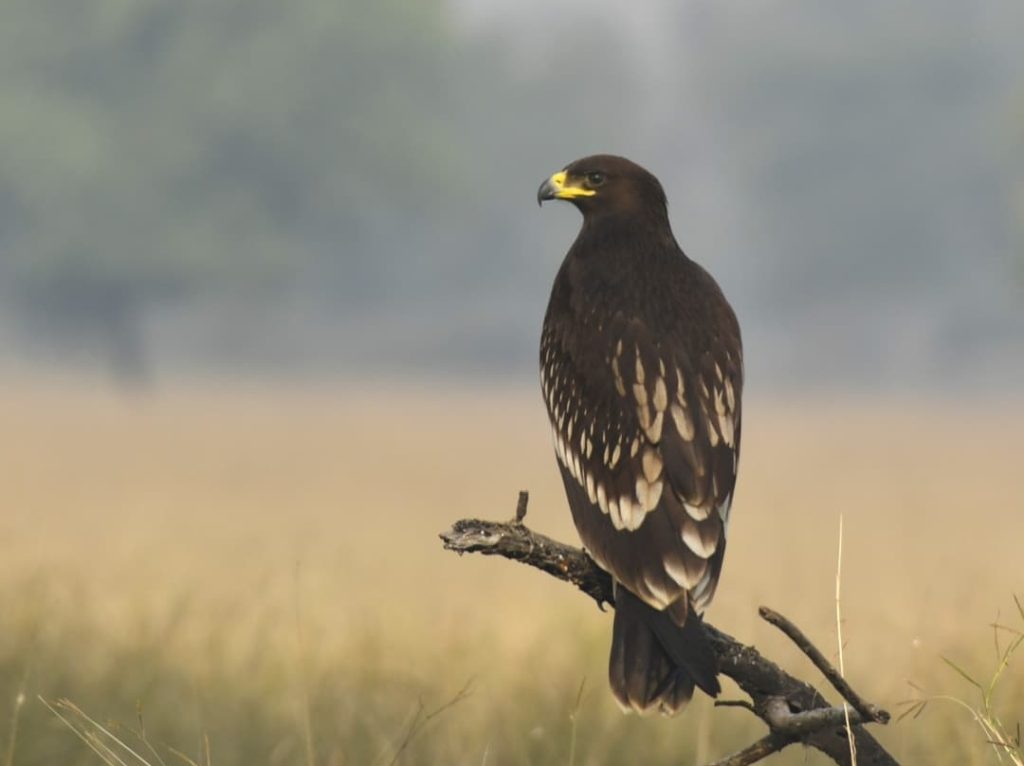
4. Greater Spotted Eagle

Greater Spotted Eagle is a large migratory eagle that can be seen during winter in and around Tal Chhapar Sanctuary. It is one of the sought-after winter raptors for birdwatchers visiting the grasslands.

Quick facts about Greater Spotted Eagle:
Scientific name: Clanga clanga
Appearance: Large dark brown eagle with broad wings, relatively short tail, and heavy body shape
Wingspan: Around 1.5–1.9 meters
Diet: Small mammals, birds, reptiles, amphibians, and carrion
Behavior: Often seen soaring, perched on trees or poles, or hunting over grasslands and wetlands
Migration: Breeds across northern Eurasia and migrates south during winter

5. Indian Spotted Eagle

Indian Spotted Eagle is one of the most sought after eagles of Tal Chhapar Sanctuary. Juveniles are more bold and can be seen easily each winter.

Quick facts about Indian Spotted Eagles:
Scientific names: Clanga hastata
Appearance: Dark brown eagle with broad wings, strong bill, and relatively heavy body shape
Diet: Small mammals, birds, reptiles, amphibians, and carrion
Behavior: Usually seen perched, soaring, or hunting over open areas
Habitat: Grasslands, wetlands, agricultural landscapes, and open country

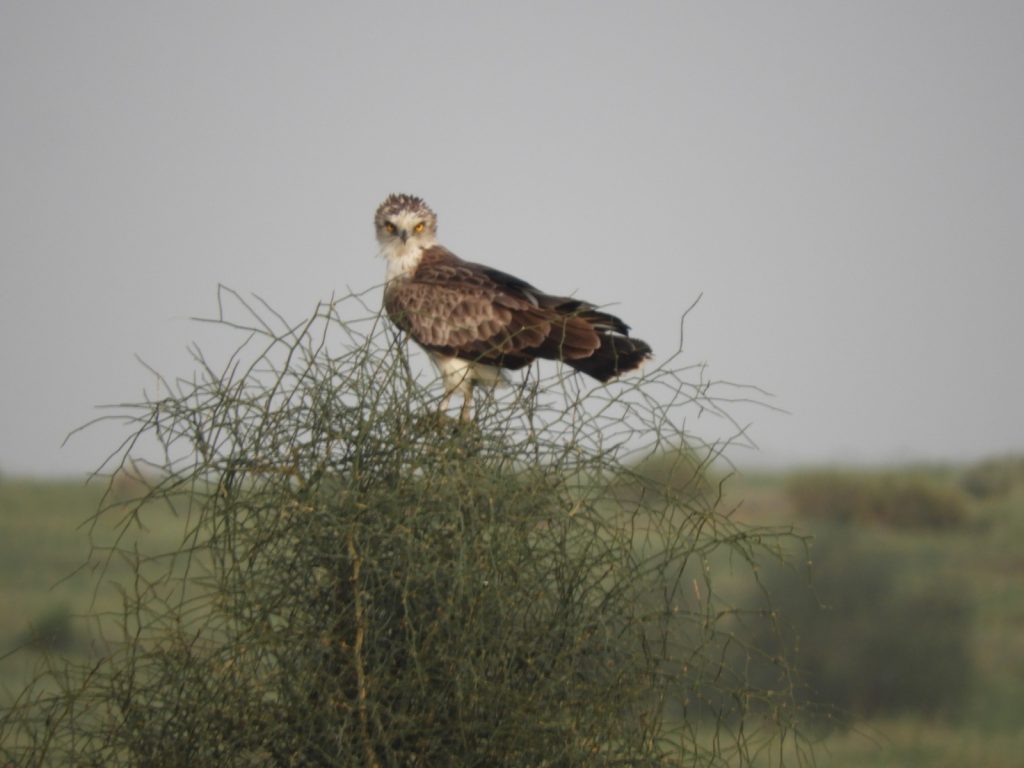
6. Short-toed Snake Eagle

Short-toed Snake Eagle is a common and impressive raptor seen in and around Tal Chhapar Sanctuary. It is famous for hunting reptiles and is often spotted hovering over open grasslands.
Quick facts about Short-toed Snake Eagle:
Scientific name: Circaetus gallicus
Appearance: Large pale-headed eagle with broad wings, white underparts, and dark markings below the wings
Wingspan: Around 1.6–1.9 meters
Diet: Mainly snakes, but also lizards, rodents, and small animals
Behavior: Frequently seen soaring high or hovering while searching for prey

7. Bonelli's Eagle

Bonelli’s Eagle is a powerful bird of prey occasionally seen in the grassland and semi-arid landscapes around Tal Chhapar Sanctuary. It is a fast and agile hunter known for chasing birds and mammals.
Quick facts about Bonelli’s Eagle:
Scientific name: Aquila fasciata
Appearance: Medium-large eagle with broad wings, pale underparts with streaking, and a long tail
Wingspan: Around 1.5–1.8 meters
Diet: Birds, mammals, reptiles, and occasionally other prey

8. White-tailed Eagle

White-tailed Eagle is a very large sea eagle and a rare visitor in much of India. It is not considered a regular species of Tal Chhapar Sanctuary and would be regarded as an unusual or exceptional sighting there.

Quick facts about White-tailed Eagle:
Scientific name: Haliaeetus albicilla
Appearance: Huge eagle with broad wings, massive bill, and a distinctive white tail in adults
Wingspan: Around 2–2.5 meters, making it one of the largest eagles in the world
Diet: Mainly fish, waterbirds, carrion, and small mammals
Habitat: Usually associated with coasts, large rivers, lakes, reservoirs, and wetlands

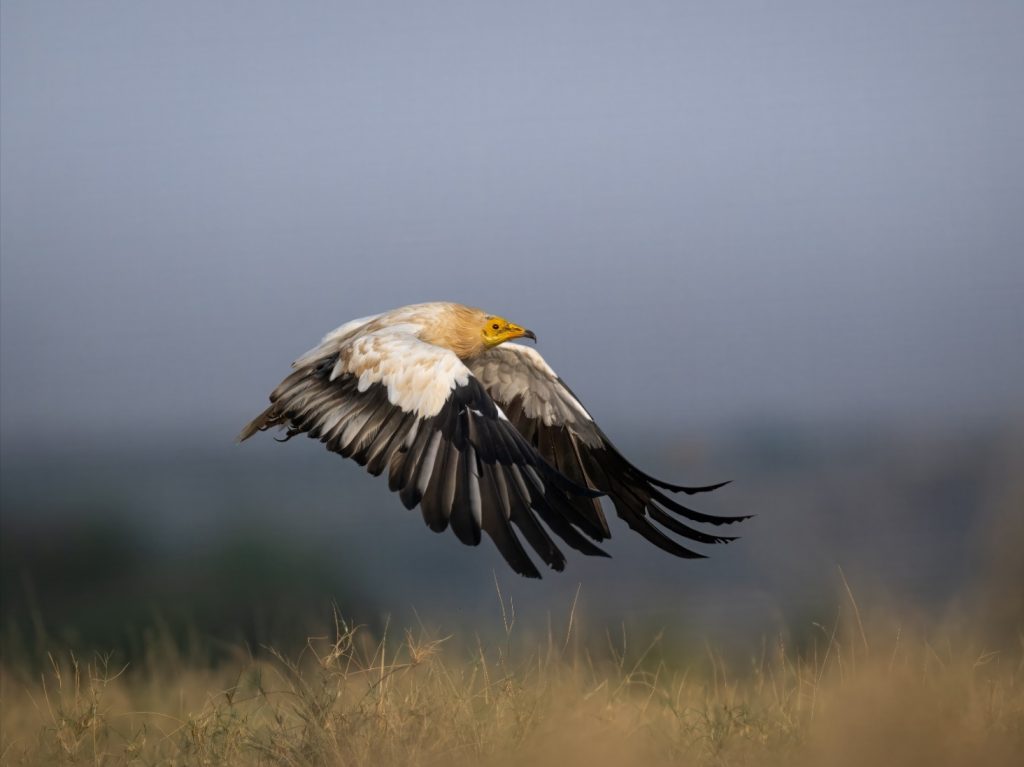
9. Egyptian Vulture

Egyptian Vulture is a distinctive and regularly seen scavenging raptor in and around Tal Chhapar Sanctuary. It is one of the smaller vultures but is famous for its intelligence and adaptability.
Quick facts about Egyptian Vulture:
Scientific name: Neophron percnopterus
Appearance: Pale white body with black flight feathers, yellow bare face, and wedge-shaped tail
Size: Smaller than most other vultures, with a wingspan around 1.6–1.8 meters
Diet: Carrion, animal remains, eggs, insects, and organic waste.

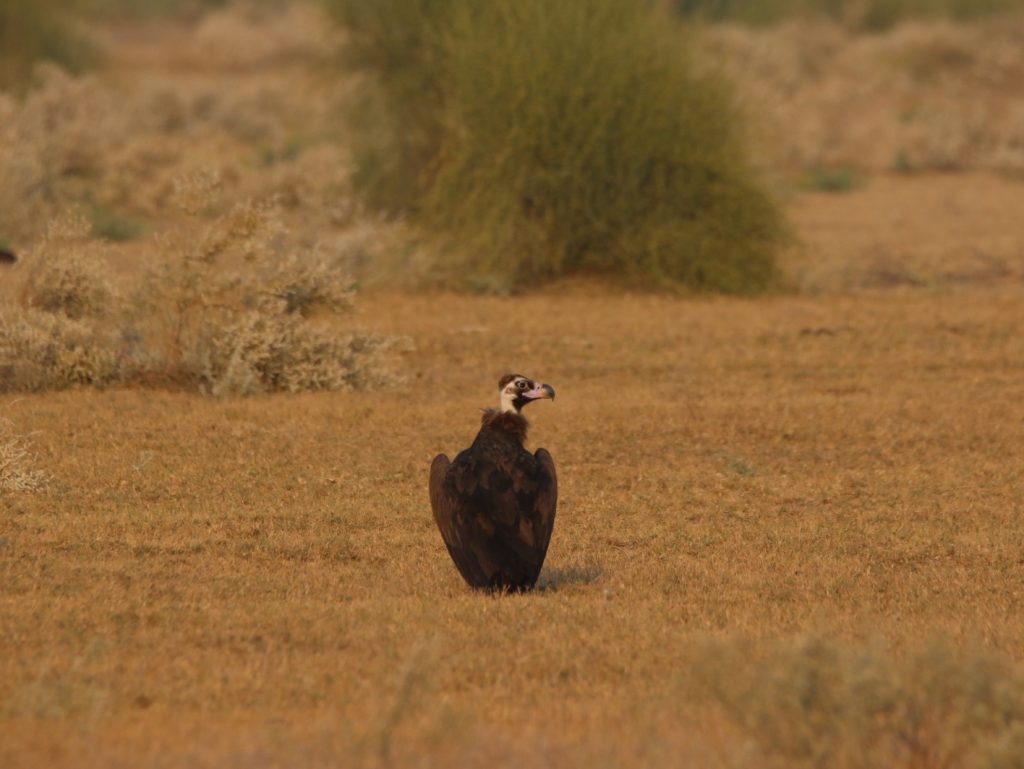
10. Cinereous Vulture

Cinereous Vulture is a massive migratory vulture and an occasional winter visitor to parts of northern India, including grassland landscapes where large soaring scavengers may appear. It is considered an exciting sighting around Tal Chhapar Sanctuary.
Quick facts about Cinereous Vulture:
Scientific name: Aegypius monachus
Appearance: Very large dark brown to blackish vulture with broad wings, heavy bill, and shaggy neck feathers
Wingspan: Around 2.5–3.1 meters, among the largest flying birds in the world
Diet: Mainly carrion (dead animals)
Behavior: Usually seen soaring high, perched near carcasses, or feeding with other vultures
Migration: Breeds across parts of Eurasia and some individuals winter in the Indian subcontinent (sighted -Mid Nov to March)

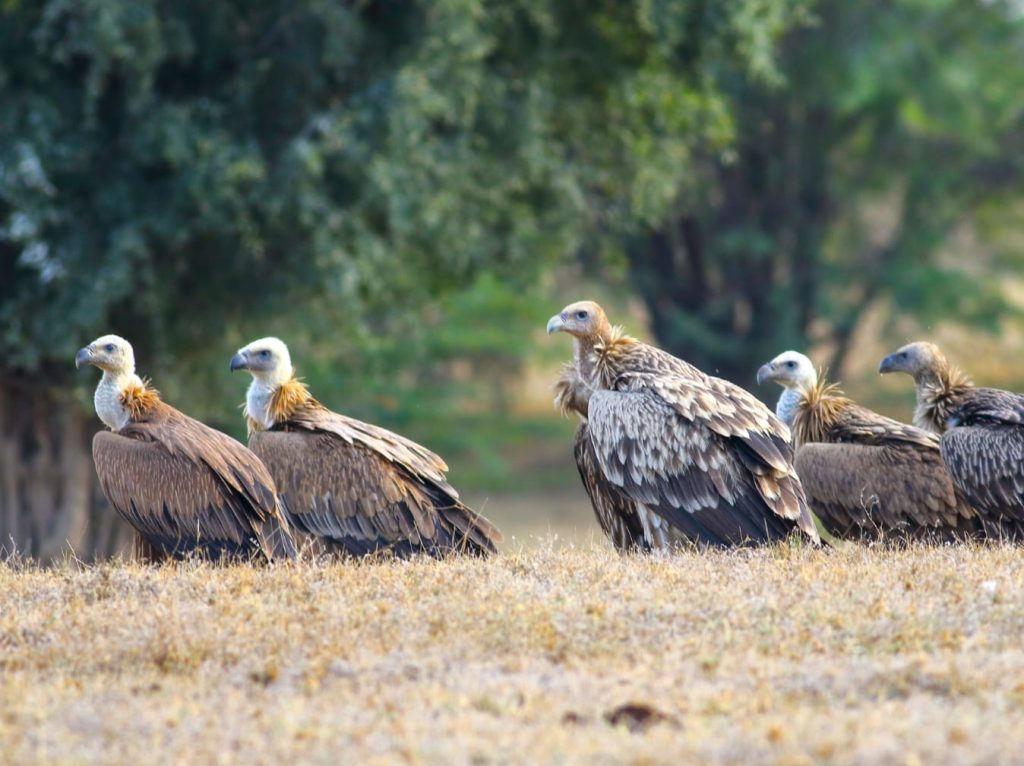
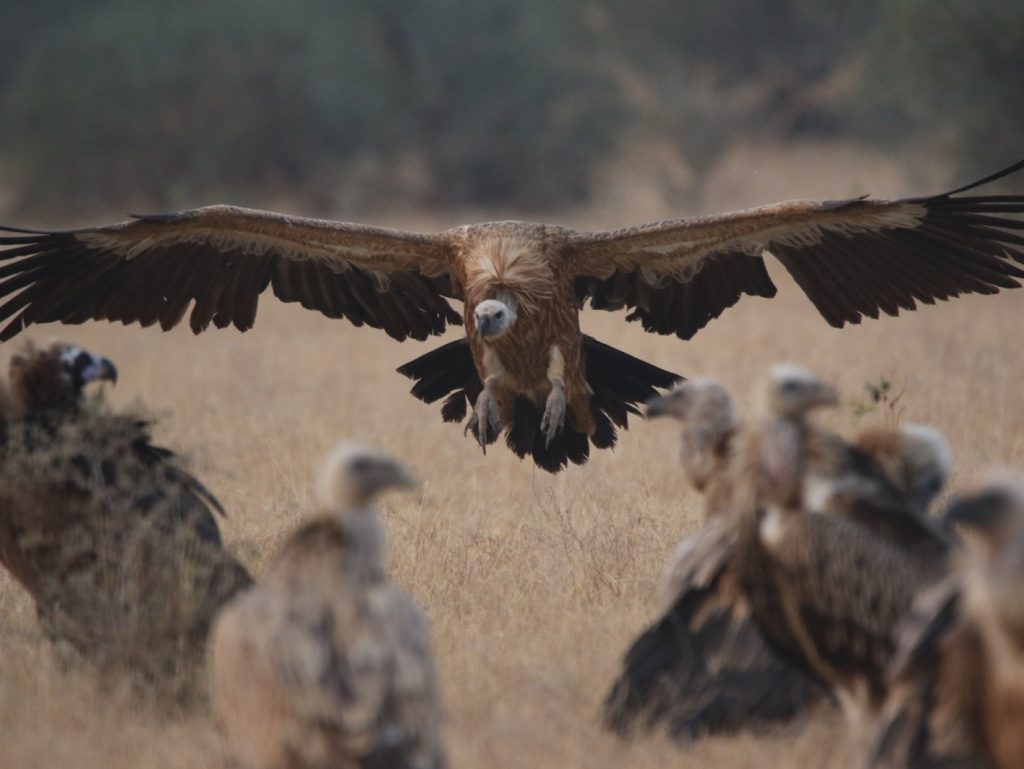
11. Himalayan Griffon Vulture

Himalayan Griffon Vulture is one of the largest vultures in Asia and is an occasional winter visitor to open landscapes of northern India, including grassland regions around Tal Chhapar Sanctuary.
Quick facts about Himalayan Griffon Vulture:
Scientific name: Gyps himalayensis
Appearance: Very large pale vulture with broad wings, pale body, dark flight feathers, and a fluffy white neck ruff
Wingspan: Around 2.6–3.1 meters
Diet: Carrion (dead animals)
Behavior: Usually seen soaring at great heights using thermals or feeding at carcasses
Habitat: Mountain regions for breeding, but moves to lower plains and open landscapes during winter
How to identify:
Long broad wings with pale underparts
Large pale neck ruff and massive size

12. Eurasian Griffon Vulture

Laggar Falcon is a powerful falcon of open country and is one of the notable raptors associated with grasslands and semi-arid habitats around Tal Chhapar Sanctuary. It’s a resident bird here.

Quick facts about Laggar Falcon:
Scientific name: Falco jugger
Appearance: Medium-large falcon with brown upperparts, pale underparts with streaking, dark moustache marks, and broad wings
Wingspan: Around 90–115 cm
Diet: Birds, rodents, lizards, and small mammals

Conservation note: Laggar Falcon populations have declined in parts of their range because of habitat loss and other pressures, making sightings especially valuable.

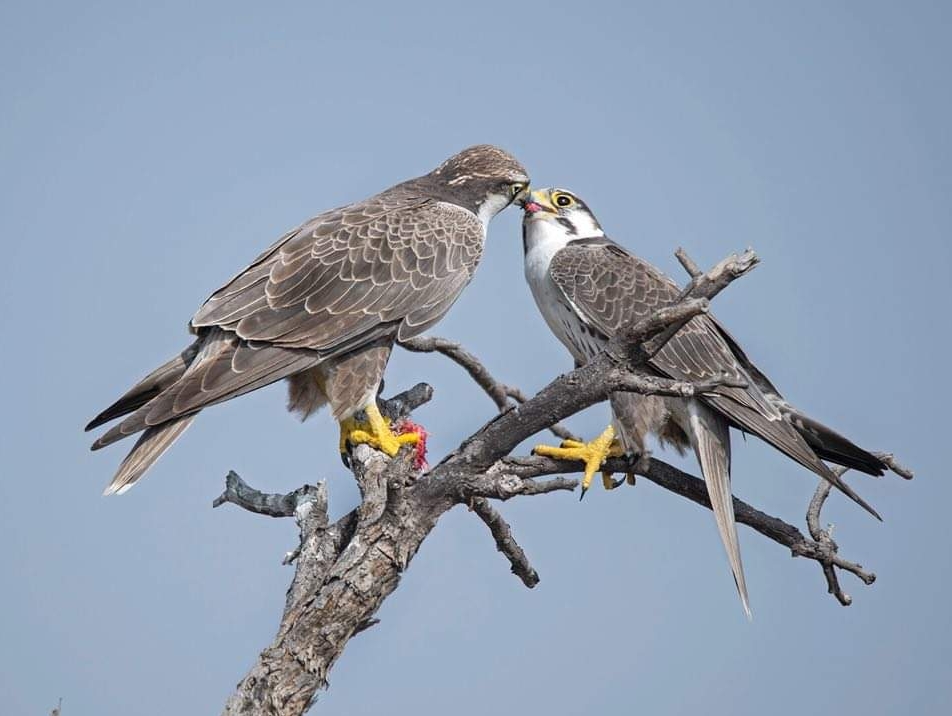
13. Laggar Falcon

Laggar Falcon is a powerful falcon of open country and is one of the notable raptors associated with grasslands and semi-arid habitats around Tal Chhapar Sanctuary. It’s a resident bird here.

Quick facts about Laggar Falcon:
Scientific name: Falco jugger
Appearance: Medium-large falcon with brown upperparts, pale underparts with streaking, dark moustache marks, and broad wings
Wingspan: Around 90–115 cm
Diet: Birds, rodents, lizards, and small mammals

Conservation note: Laggar Falcon populations have declined in parts of their range because of habitat loss and other pressures, making sightings especially valuable.

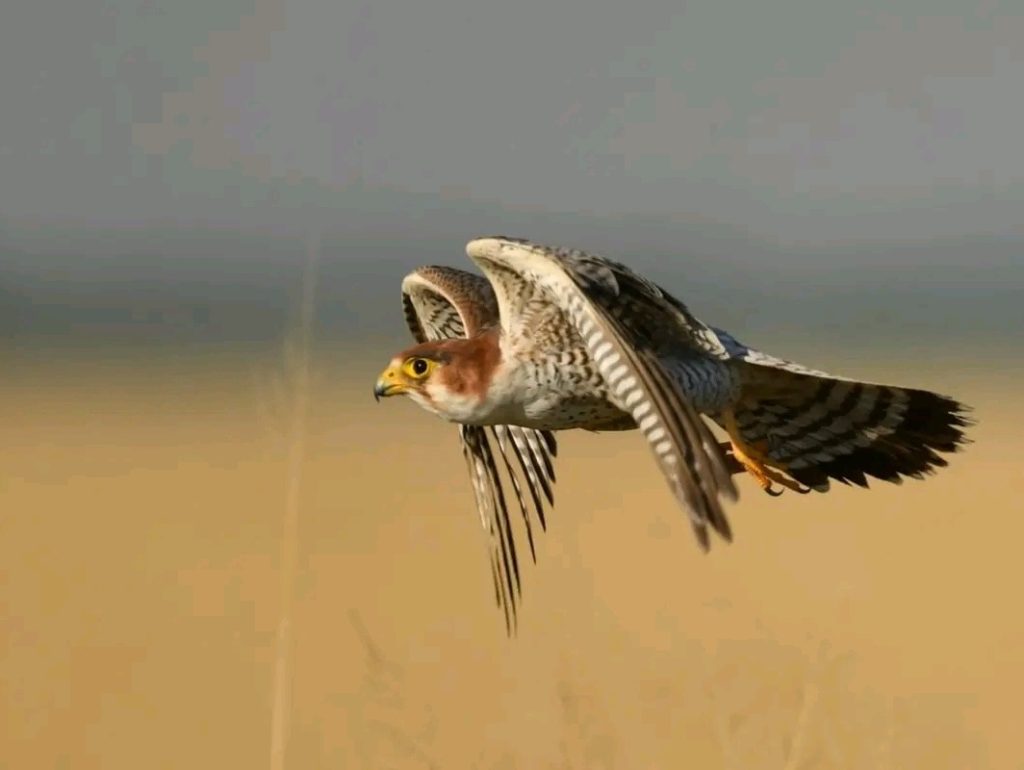
14. Red-necked Falcon

Red-necked Falcon is a striking and fast-flying falcon of open country that can be seen around Tal Chhapar Sanctuary. It is often considered one of the attractive resident falcons of the region. Known for fast aerial hunting and impressive flight skills.

Quick facts about Red-necked Falcon:
Scientific name: Falco chicquera
Appearance: Slim falcon with grey upperparts, reddish-brown crown and neck, white face, and dark moustache markings
Wingspan: Around 65–85 cm
Diet: Mainly small birds, but also insects, lizards, and small mammals
Behavior: Often hunts with fast, low flights and sudden attacks on prey
Best time to see: Early morning and late afternoon usually provide the best chances when falcons are actively hunting across the grasslands.

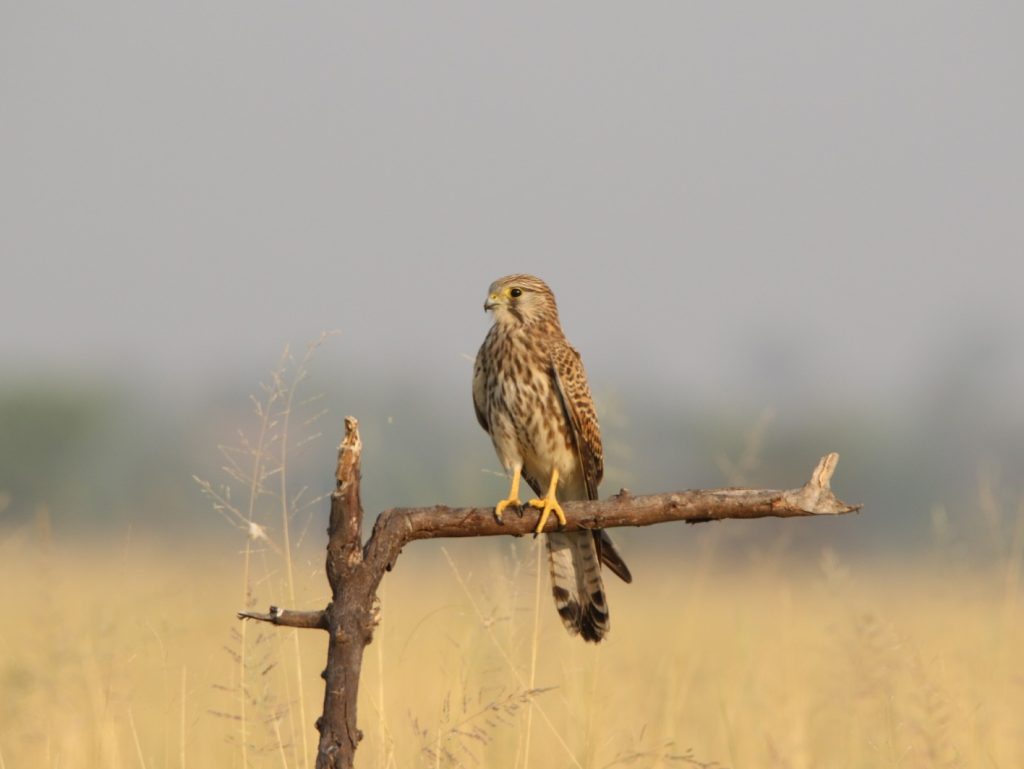
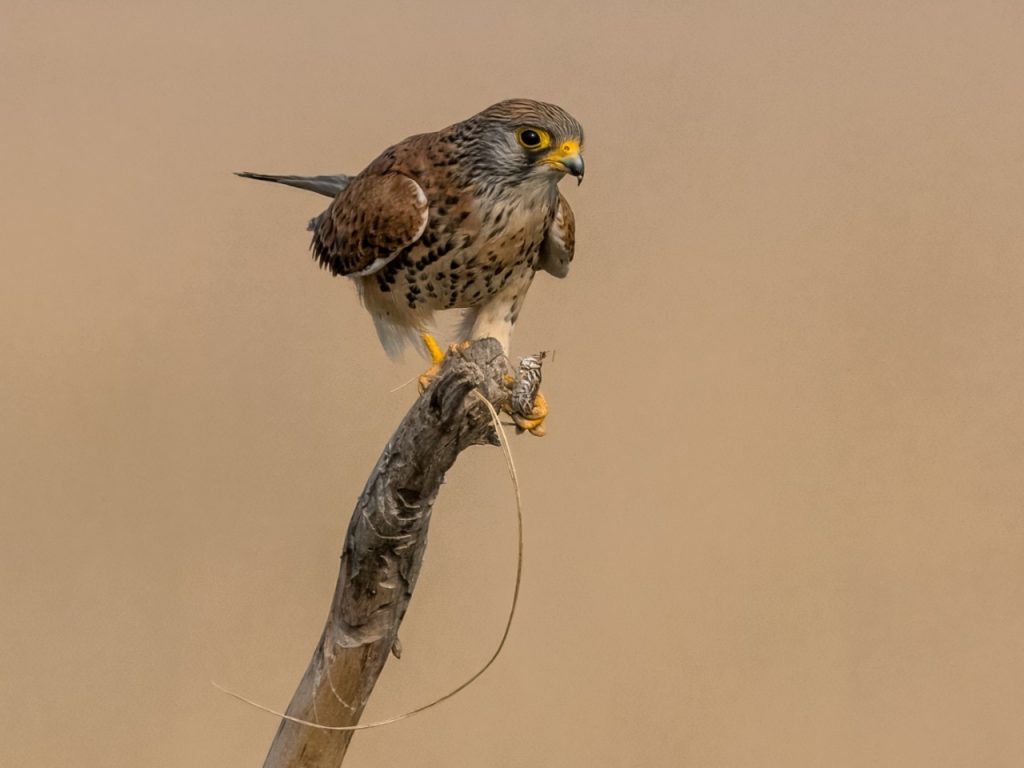
15. Eurasian Kestrel

Eurasian Kestrel is a common and widespread small falcon that can be seen in and around Tal Chhapar Sanctuary, especially in open grassland habitats.

Quick facts about Eurasian Kestrel:
Scientific name: Falco tinnunculus
Appearance: Small falcon with pointed wings, long tail, and brown upperparts with dark spotting; males often show a grey head
Wingspan: Around 65–82 cm
Diet: Rodents, insects, lizards, and small birds
Behavior: Famous for hovering in one place while searching for prey below

Identification tip:
If you see a small falcon repeatedly hovering over grassland before diving suddenly, it is often a Eurasian Kestrel.

16. Lesser Kestrel

Lesser Kestrel is a small migratory falcon and one of the characteristic winter raptors of Tal Chhapar Sanctuary. 

Quick facts about Lesser Kestrel:

Scientific name: Falco naumanni

Appearance: Small slender falcon; males usually show a grey head, rusty back, and pale claws, while females are more brown and streaked

Wingspan: Around 58–72 cm

Diet: Mainly insects such as grasshoppers, beetles, and locusts, but also small vertebrates

Migration: Breeds in Europe and Central Asia and migrates south during winter

One of the important winter migratory falcons that attracts birdwatchers

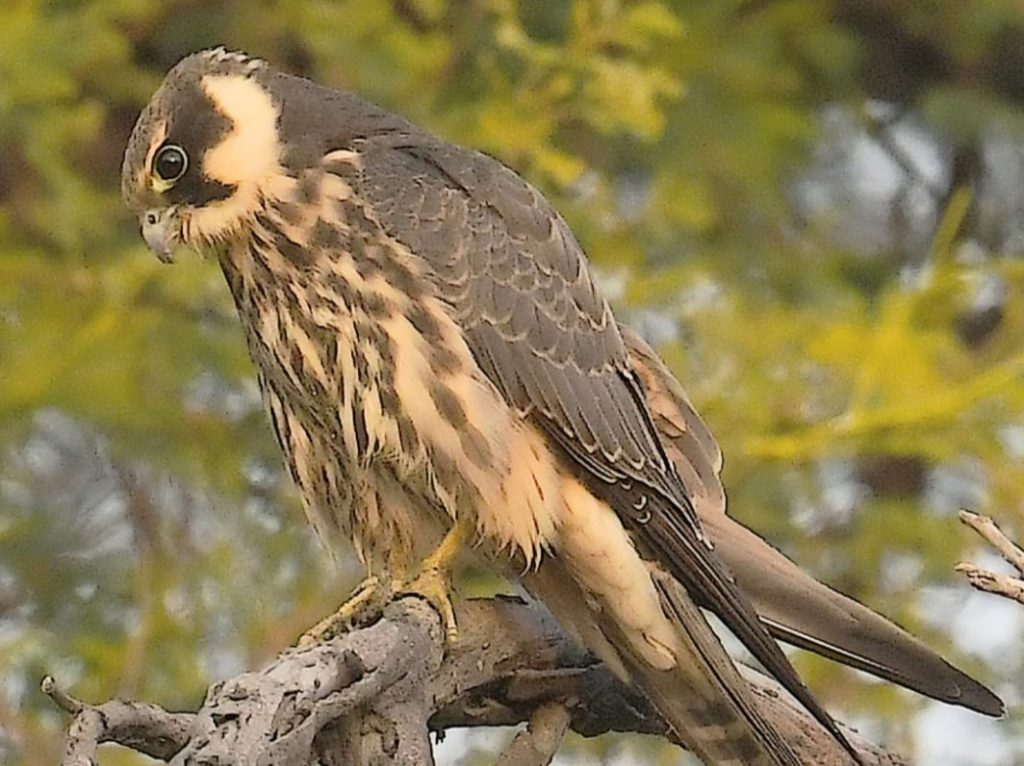
17. Eurasian Hobby

Eurasian Hobby is a fast and agile migratory falcon that may occasionally be seen around Tal Chhapar Sanctuary during migration or winter. It is much less frequently encountered than kestrels.

Quick facts about Eurasian Hobby:

Scientific name: Falco subbuteo

Appearance: Slim falcon with pointed wings, dark upperparts, pale throat, streaked underparts, and distinctive reddish “trousers” near the legs

Wingspan: Around 70–85 cm

Diet: Mainly small birds, dragonflies, swifts, swallows, and large insects

Identification tip: Long pointed wings and swift-like flight often make Eurasian Hobby look different from stockier kestrels.

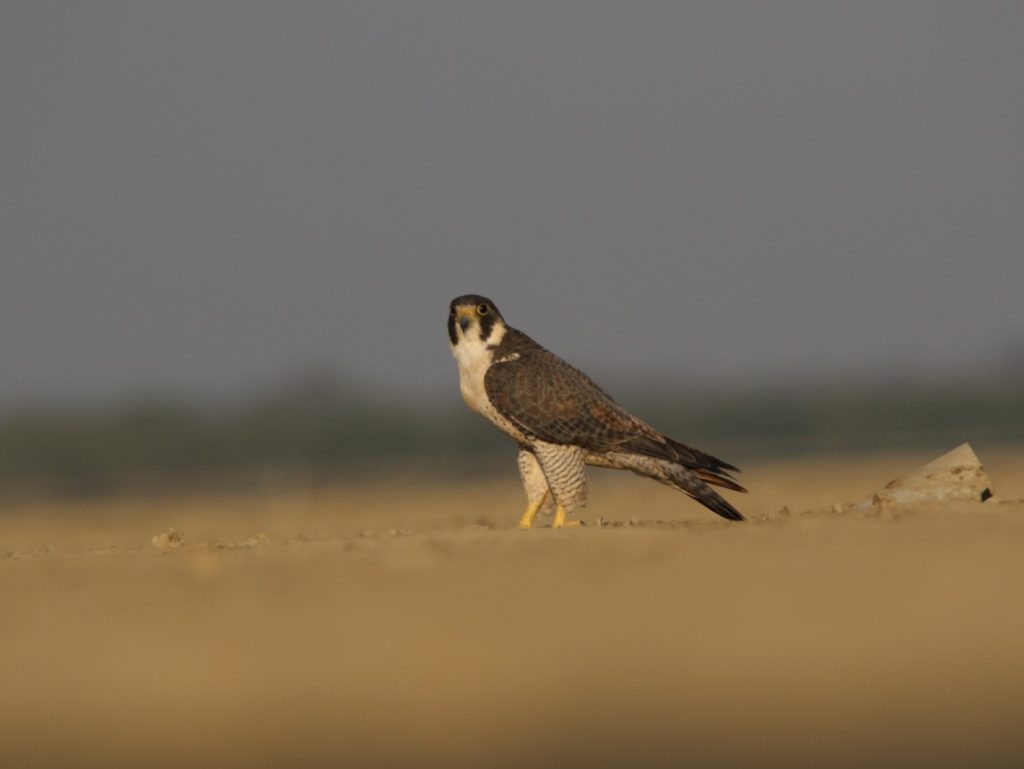
18. Peregrine Falcon

Peregrine Falcon is one of the world’s fastest birds and an exciting raptor that may be seen in and around Tal Chhapar Sanctuary during winter and migration. Considered one of the most powerful and efficient bird-hunting falcons.

Quick facts about Peregrine Falcon:

Scientific name: Falco peregrinus

Appearance: Powerful falcon with broad pointed wings, dark hooded head, heavy dark moustache marks, and barred underparts

Wingspan: Around 80–120 cm

Diet: Mainly birds, including pigeons, doves, waders, and other medium-sized birds

Behavior: Famous for high-speed hunting dives called stoops

Speed: Can exceed 300 km/h during hunting dives, making it among the fastest animals on Earth.

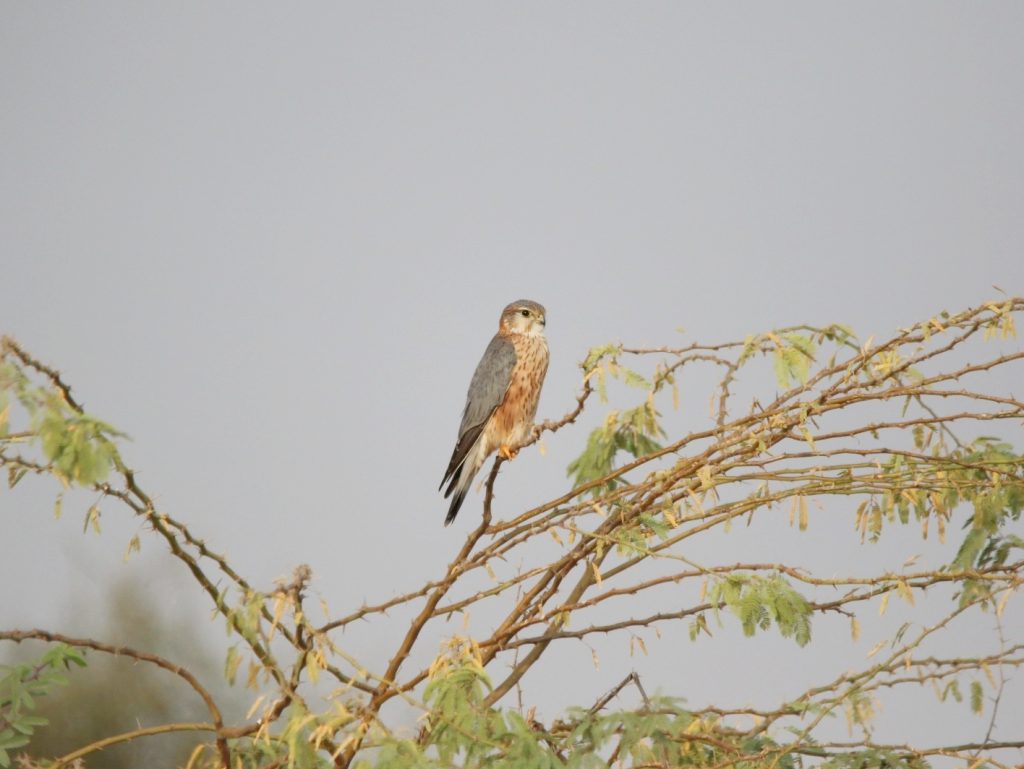
19. Merlin Falcon

Merlin is a small, fast falcon and an uncommon winter visitor that may occasionally be seen around Tal Chhapar Sanctuary. 

Quick facts about Merlin:

Scientific name: Falco columbarius

Appearance: Small compact falcon with pointed wings, relatively short tail, and fast wingbeats

Wingspan: Around 55–70 cm

Diet: Mainly small birds, but also insects and small mammals

Migration: Breeds in northern regions and winters farther south, including parts of the Indian subcontinent

Identification tip:

Merlin is generally smaller, more compact, and more powerful-looking than kestrels, and it usually hunts with rapid, direct flight rather than hovering.

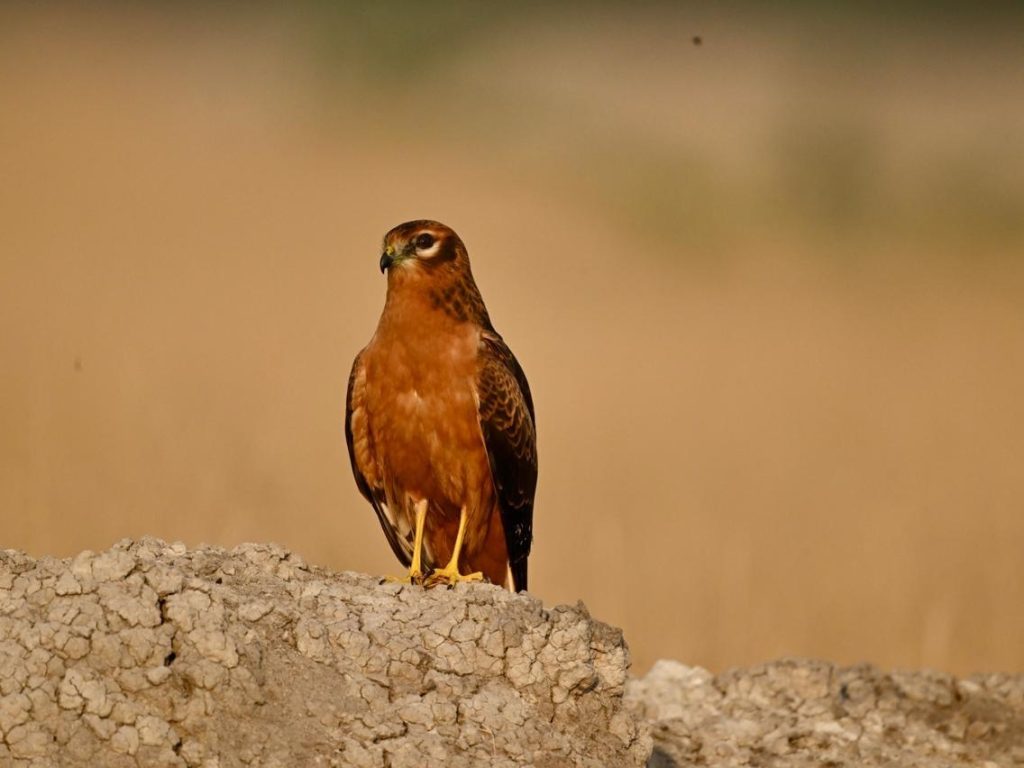
20. Montagu's Harrier

Montagu’s Harrier is one of the most important winter raptors of Tal Chhapar Sanctuary and is regularly seen hunting low over the grasslands.
Quick facts about Montagu’s Harrier:
Scientific name: Circus pygargus
Appearance: Slim harrier with long wings and tail; males are pale grey with black wing tips, while females and juveniles are brown
Wingspan: Around 95–120 cm
Diet: Small birds, rodents, insects, reptiles, and small mammals
Behavior: Famous for flying low over grasslands while searching for prey
Migration: Breeds in Europe and Central Asia and migrates to India during winter.

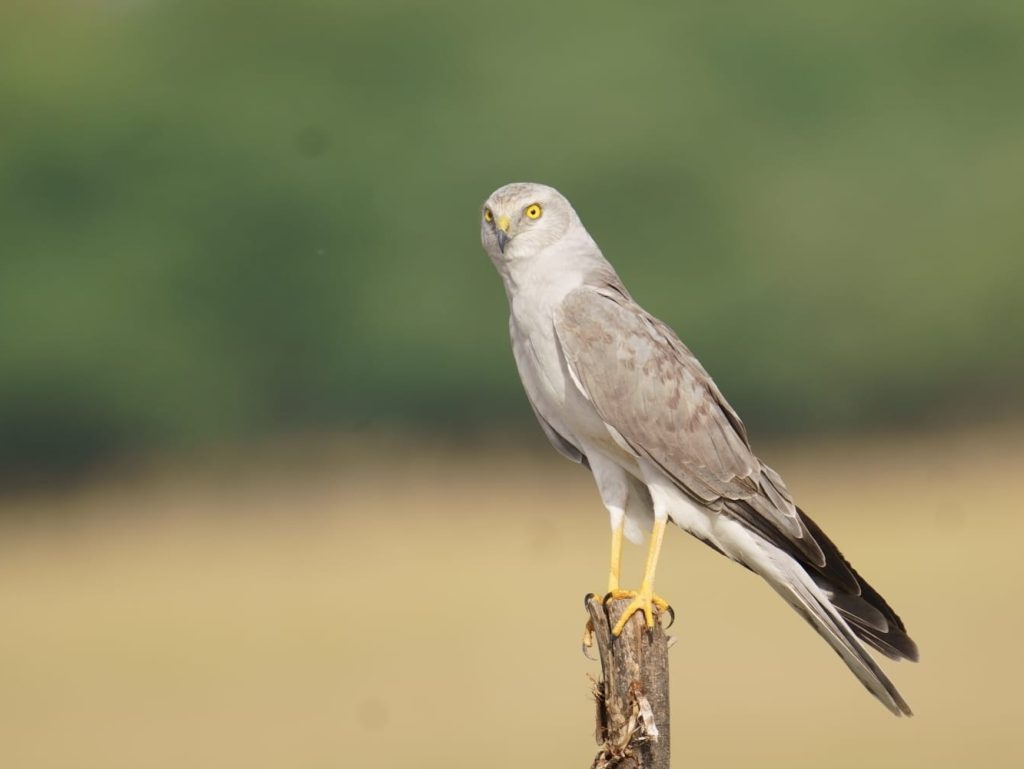
21. Pallid Harrier

Pallid Harrier is one of the signature winter raptors of Tal Chhapar Sanctuary and is especially popular among birders because large numbers can winter in Rajasthan’s grasslands.
Quick facts about Pallid Harrier:
Scientific name: Circus macrourus
Appearance: Slim, elegant harrier with long wings and tail; adult males are pale grey with black wing tips, while females and juveniles are brownish with pale collars
Wingspan: Around 95–115 cm
Diet: Rodents, small birds, insects, reptiles, and small mammals
Behavior: Hunts by flying low over grasslands using slow, buoyant flight
Migration: Breeds in Central Asia and Eastern Europe and migrates to the Indian subcontinent during winter

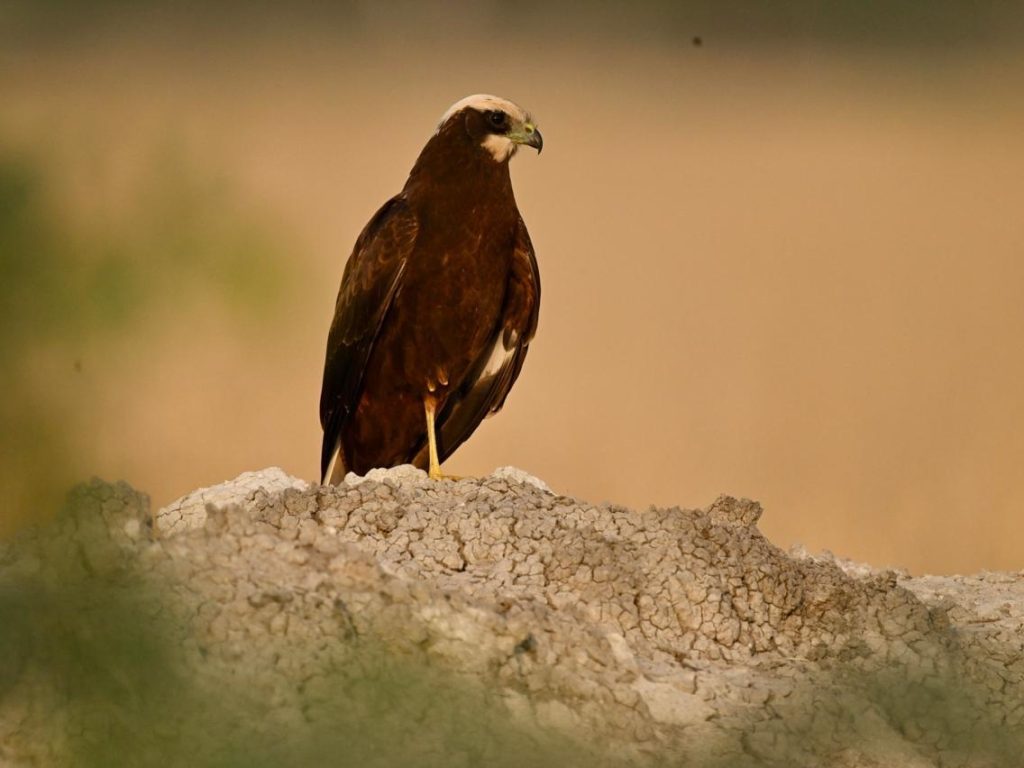
22. Western Marsh Harrier

Western Marsh Harrier is a large harrier that winters across much of India and can be seen around wetlands, grasslands, and open habitats near Tal Chhapar Sanctuary, especially where there are marshy patches, water bodies, or dense vegetation.
Quick facts about Western Marsh Harrier:
Scientific name: Circus aeruginosus
Appearance: Large, broad-winged harrier; males show grey wings with brown body, while females are darker brown with pale head and shoulders
Wingspan: Around 110–130 cm
Diet: Birds, rodents, reptiles, amphibians, insects, and small mammals.

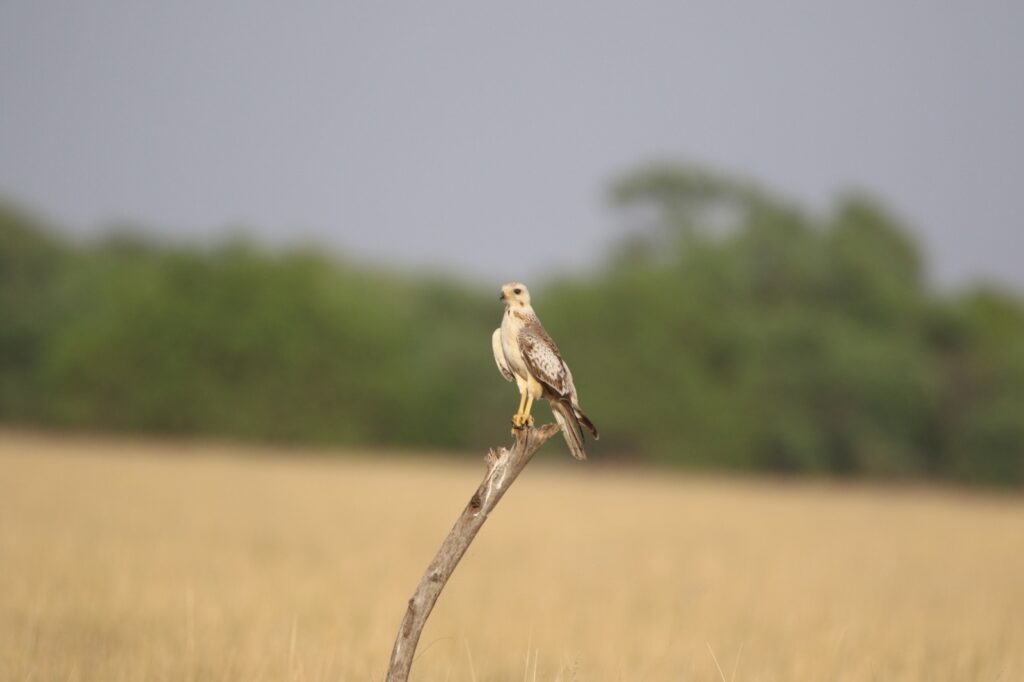
23. White-eyed Buzzard

White-eyed Buzzard is a common raptor of open country and is regularly seen in grasslands and agricultural landscapes around Tal Chhapar Sanctuary. It is one of the characteristic resident birds of prey of the region. Quick facts about White-eyed Buzzard: Scientific name: Butastur teesa Appearance: Medium-sized brown buzzard with broad wings, pale underparts, and a distinctive pale or whitish iris in adults Wingspan: Around 85–105 cm Diet: Lizards, rodents, insects, snakes, frogs, and small birds.

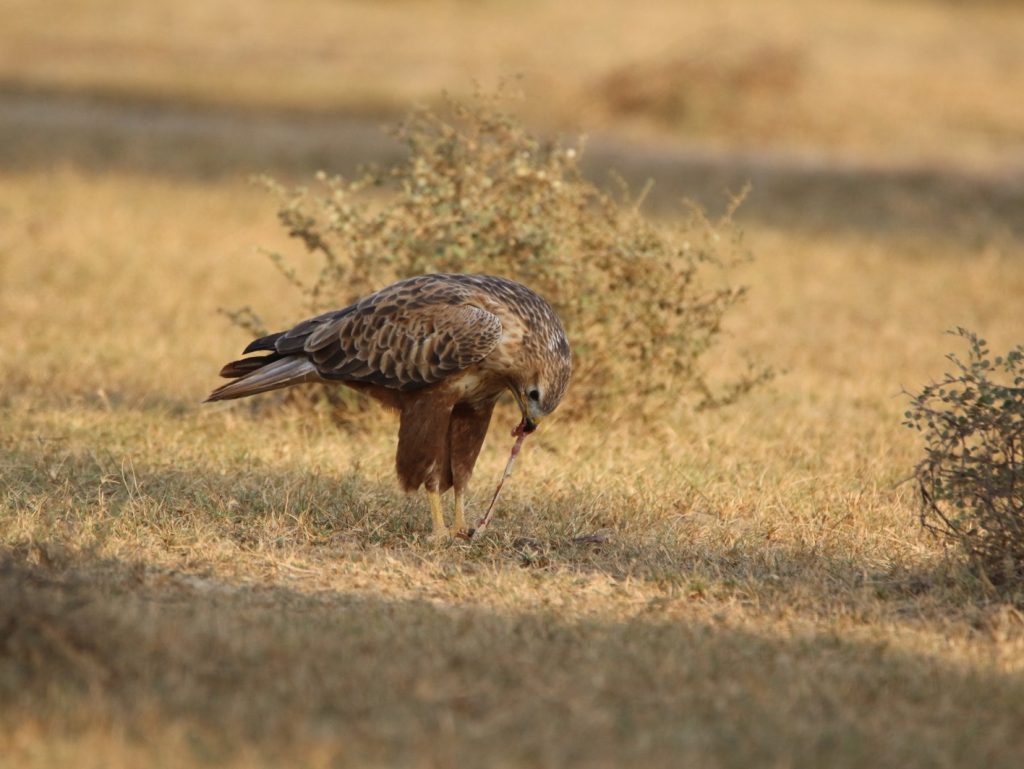
24. Long-legged Buzzard

Long-legged Buzzard is a large buzzard of open country and semi-arid landscapes and is an exciting winter raptor that may be seen around Tal Chhapar Sanctuary. The open grasslands make this habitat suitable for hunting and soaring.
Quick facts about Long-legged Buzzard:
Scientific name: Buteo rufinus
Appearance: Large broad-winged buzzard with variable plumage ranging from pale sandy to darker brown forms
Wingspan: Around 120–150 cm
Diet: Rodents, reptiles, birds, hares, and other small animals
Identification tips:
Noticeably larger and heavier than White-eyed Buzzard. Long wings and relatively long legs give the species its name. Often shows pale body with contrasting darker flight feathers in many individuals

Best time to see: Mostly during winter months when migratory raptors increase the diversity of grassland birds of prey.

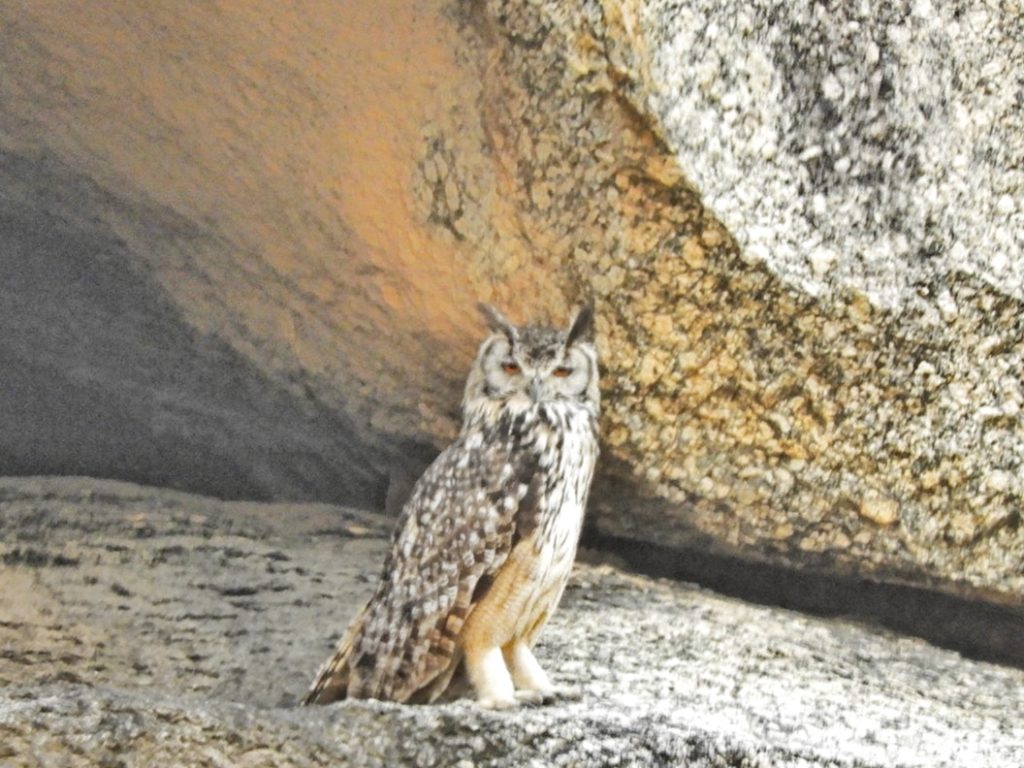
25. Indian Eagle-Owl

Indian Eagle-Owl is one of the most impressive owls found in rocky, scrub, and open landscapes around Tal Chhapar Sanctuary. It is a favorite species among birders and wildlife photographers because of its large size and striking appearance. Quick facts about Indian Eagle-Owl: Scientific name: Bubo bengalensis Appearance: Large owl with prominent ear tufts, orange eyes, heavily streaked body, and powerful talons Size: One of India’s largest owls, with a wingspan around 100–140 cm Diet: Rodents, birds, reptiles, hares, and small mammals Behavior: Mostly nocturnal and usually rests quietly during the day in shaded roost sites Habitat: Rocky outcrops, scrublands, grasslands, ravines, and semi-arid landscapes

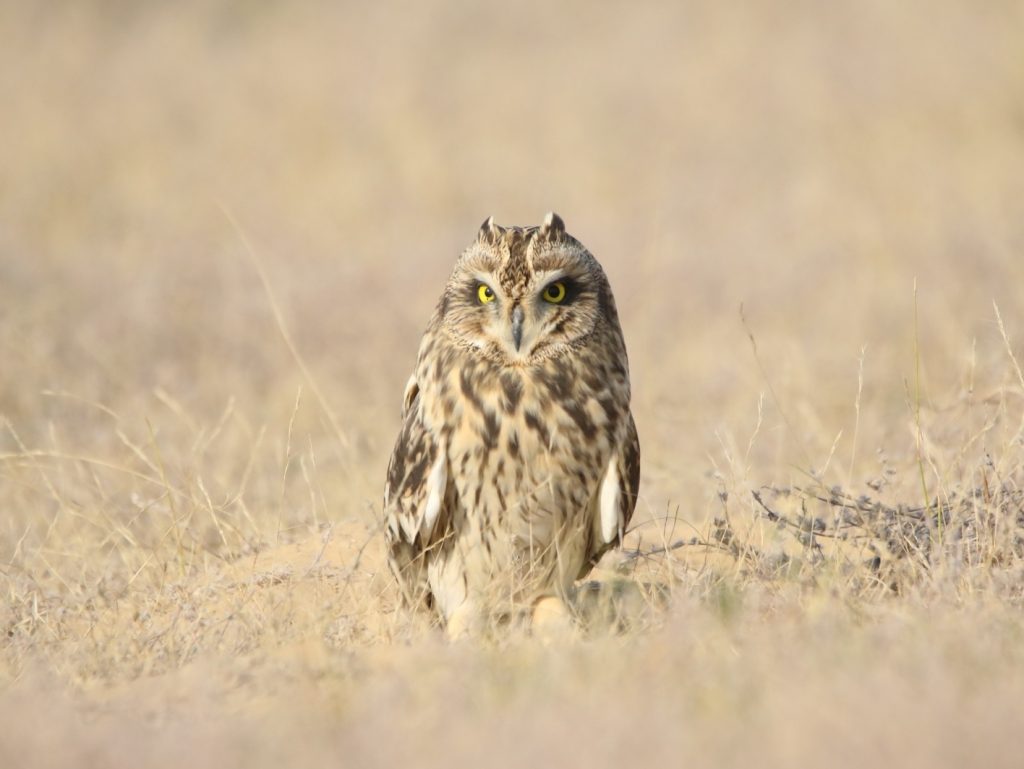
26. Short-eared Owl

Short-eared Owl is a highly sought-after winter owl in grassland habitats and is occasionally recorded in and around Tal Chhapar Sanctuary. Because Tal Chhapar is a grassland ecosystem, it provides suitable habitat for this open-country owl.
Quick facts about Short-eared Owl:
Scientific name: Asio flammeus
Appearance: Medium-sized owl with yellow eyes, streaked buff-brown body, pale face, and very small ear tufts that are usually not visible
Wingspan: Around 85–110 cm
Diet: Rodents, small birds, and small mammals
Behavior: Unlike many owls, often active during dawn, dusk, and even daytime.

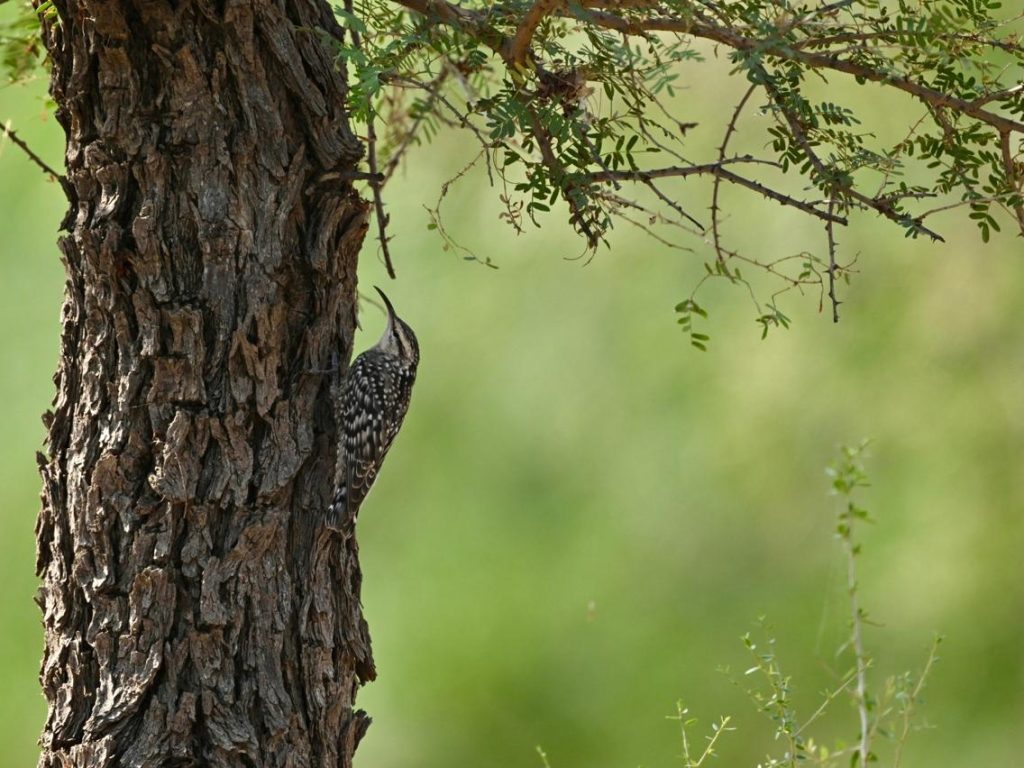
27. Indian Spotted Creeper

Indian Spotted Creeper is a small, beautifully patterned tree-climbing bird found mainly in Gaushala area of Tal Chhapar.

Quick facts about Indian Spotted Creeper:
Scientific name: Salpornis spilonotus
Appearance: Small bird with heavily spotted and streaked plumage, curved bill, and cryptic bark-like coloration
Size: Around 12–14 cm long
Diet: Insects, spiders, and other small invertebrates collected from bark surfaces
Behavior: Climbs along tree trunks and branches searching for insects, similar to treecreepers
Habitat: Dry deciduous woodland, thorn forest, scrub, and wooded areas

Why special:
Excellent camouflage makes it difficult to spot
Often moves in short hops along trunks and branches. Considered an attractive species for birders because it can be challenging to find.

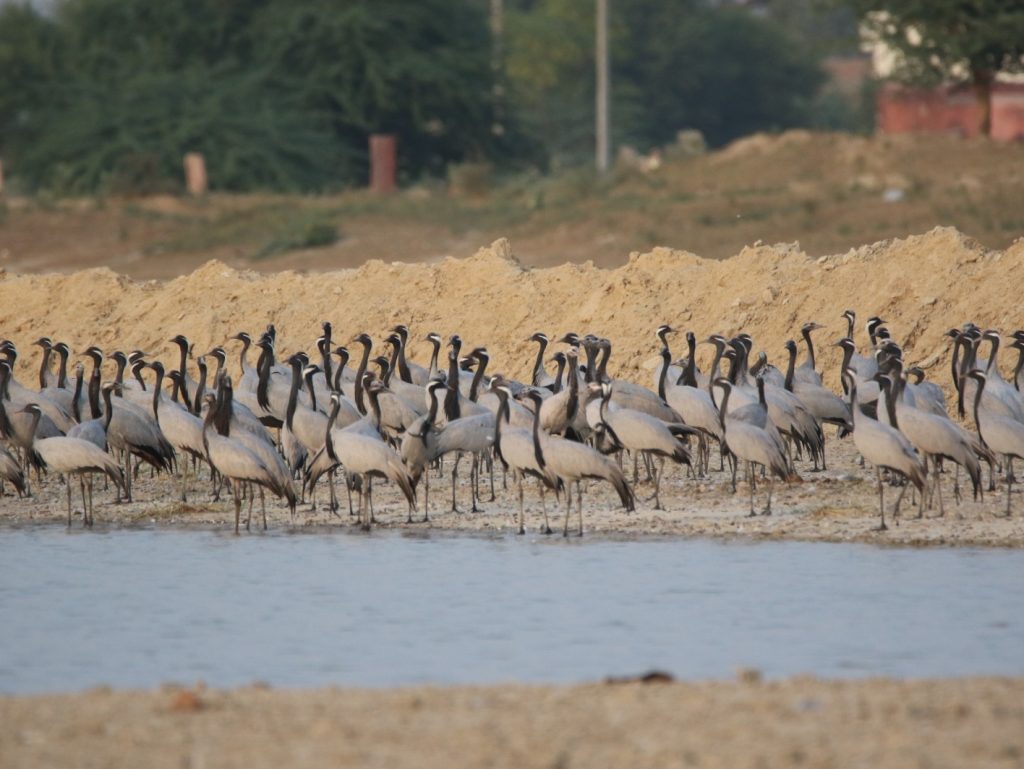
28. Demoiselle Crane

Demoiselle Crane is one of the most beautiful migratory birds associated with the grasslands and open landscapes around Tal Chhapar Sanctuary.
Quick facts about Demoiselle Crane:
Scientific name: Anthropoides virgo
Appearance: Elegant grey crane with black neck and chest plumes, long white ear tufts, and slender body
Height: Around 85–100 cm
Wingspan: Around 155–180 cm
Diet: Seeds, grains, insects, small reptiles, and plant material
Behavior: Usually seen in flocks, feeding in fields or flying in groups
Migration: Breeds across Central Asia and migrates south during winter
Identification tips: Smaller and more elegant than many other cranes. Distinctive white ear tufts extending behind the eyes. Black neck and chest contrast strongly with the grey body. Their calls and synchronized flying make them easy to notice.

Scroll to Top